









































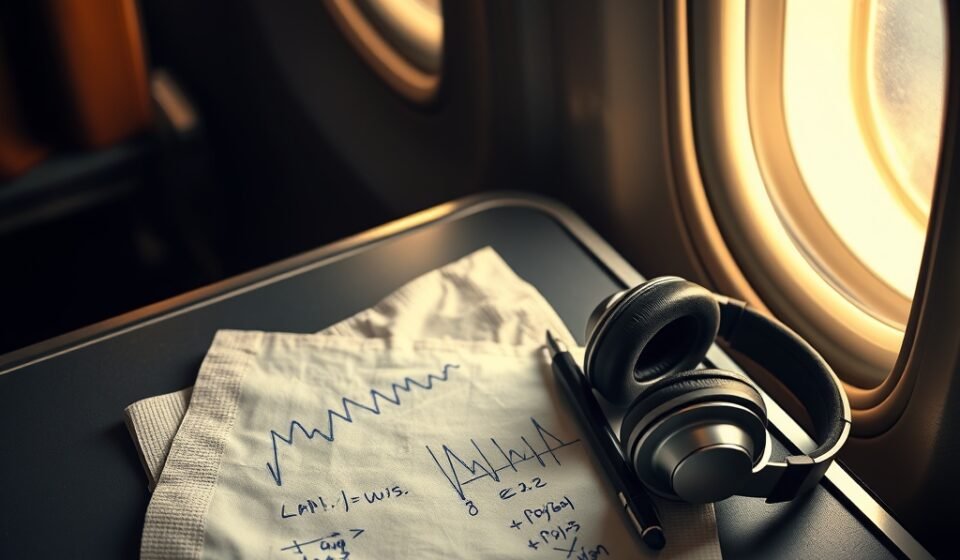

Somewhere over the Atlantic in 1978, an MIT professor put on a brand-new pair of airline headphones, expecting music, and got jet-engine drone instead. That frustration is the seed of the Amar Bose noise-cancelling headphones origin story — one of the most repeated tales in innovation folklore, and, as we’ll get into, one that’s been polished a little too smooth by decades of retelling. The core lesson survives the polishing, though: friction-driven innovation doesn’t start in a lab. It starts with someone annoyed enough to do something about it.
Let’s take the story as it’s usually told, then look honestly at which parts we can actually stand behind.
The Flight That Started It All
The setup is simple. Amar Bose, already a well-known professor and the founder of a growing audio company, boarded a transatlantic flight and slipped on the headphones the airline handed out. He wanted to hear music. What he got was the low, grinding roar of the jet engines swallowing everything else.
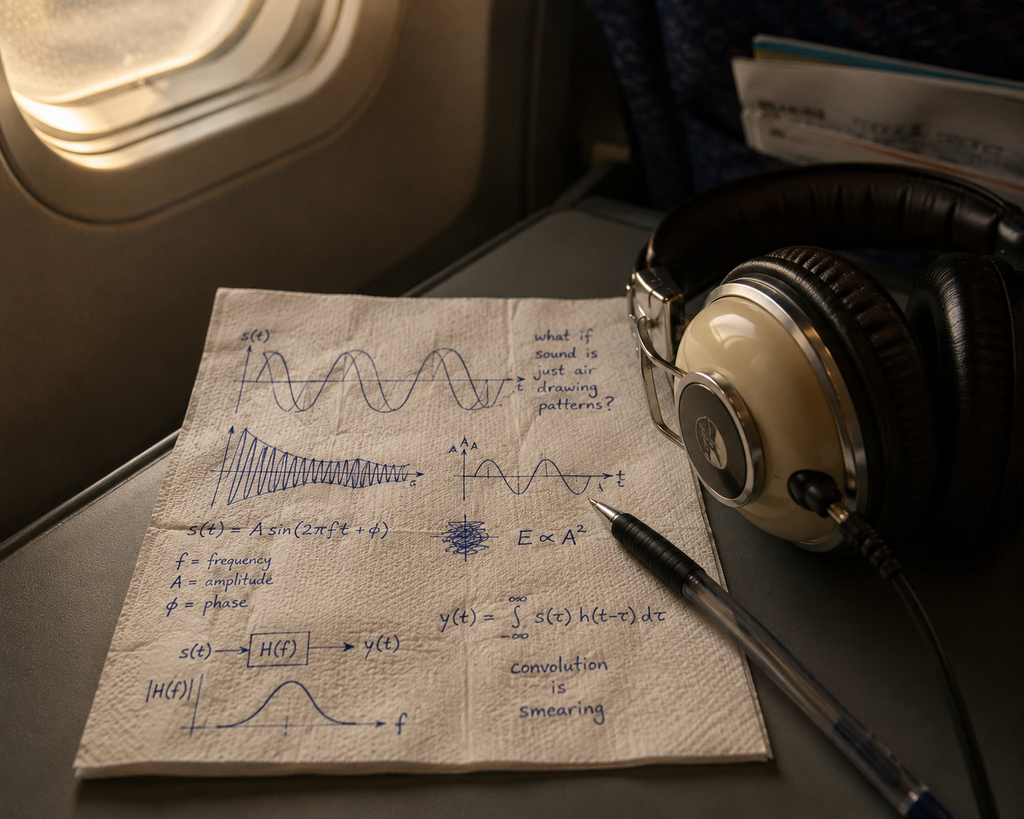
Most people in that seat do one of two things: crank the volume until the music wins, or give up and stare out the window. Bose reportedly did neither. According to the popular version of events, he pulled out a paper napkin and started writing equations, right there in his seat, trying to work out the math behind cancelling that engine drone rather than just drowning it out.
It’s a great scene. It’s also worth pausing on that word “reportedly.”
The Napkin Equation
The napkin detail is the part of this story that’s told the most and verified the least. It shows up in countless secondhand retellings and in Bose Corporation’s own popularized history, but there’s no publicly available flight log, notebook, or archival document that confirms Bose actually sketched a napkin equation mid-air, let alone that he had the essential math finished by the time the plane touched down. That specific, cinematic beat — pen to napkin, equations flowing before landing — is corporate storytelling more than documented fact, and it’s worth naming that plainly rather than repeating it as settled history.
None of that means the underlying idea is false. It’s entirely plausible, even likely, that Bose’s irritation on that flight planted the technical question that led to active noise reduction. What’s unverifiable is the specific staging — the napkin, the in-flight math, the tidy ending before wheels touched runway. Here’s the more useful takeaway anyway: breakthrough ideas rarely begin as clean, funded plans. They begin as scribbles, mental notes, or half-formed hunches jotted on whatever’s within reach — a napkin, a receipt, the back of a boarding pass. The medium isn’t the point. The moment of noticing is.
From Sketch to Science: Why It Took Years
Whatever Bose actually wrote on that flight, everyone agrees on the next part: turning a rough insight into a working product took a long time. Bose Corporation didn’t ship consumer noise-cancelling headphones until well over a decade later, and the exact span — often rounded to “about twenty years” in popular accounts — isn’t something we can pin down to the year with confidence. What’s safe to say is that the gap between the flash of insight and the shelf-ready product was long, involved serious engineering across acoustics and electronics, and was nothing like an overnight fix.
That gap is the part the napkin story tends to skip over, because a decade of failed prototypes doesn’t make for as tidy an anecdote as a genius scribbling on a napkin. But it’s the more honest lesson: the spark is cheap. The years of grinding it into something that works are not. If you’re chasing an idea today, expect the unglamorous middle to be longer than the exciting beginning.
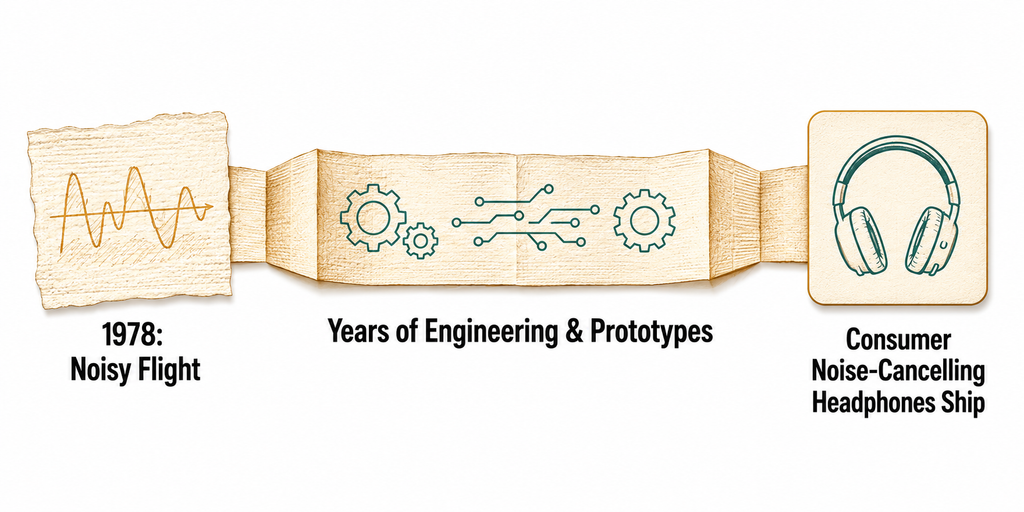
The Real Story Isn’t Genius — It’s Friction
Strip away the napkin and the exact timeline, and what’s left is sturdier than the legend: a specific person, in a specific uncomfortable moment, ran into a gap between what existed and what he needed. That gap is friction, and friction-driven innovation is a far more reliable engine than waiting around for genius to strike. Bose didn’t set out with a business plan to build headphones. He set out to hear his music, couldn’t, and that irritation became the pressure that eventually produced a solution.
This reframing matters because it changes what you’re supposed to take from the story. It’s not “be a brilliant MIT professor.” It’s “pay attention to the moment something doesn’t work well enough for you.” That moment is available to everyone, on a plane or otherwise. The six-step framework for turning any human friction into a business is essentially a map of what happens after that initial spark — and it starts with the exact kind of frustration Bose ran into at 30,000 feet.
A Bigger Pattern: Humans as the Source Code of Ideas
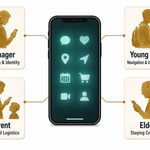
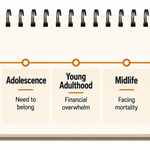
Zoom out further and the Bose story stops being a one-off and starts looking like a template. Every hospital wing, every neonatal ICU, every financial instrument you’ve never thought twice about exists because someone, in some specific phase of life — infancy, parenthood, old age — ran into a need the world hadn’t solved yet. Money itself wasn’t dreamed up in the abstract; it was invented because an earlier system failed to meet a real, specific human need.
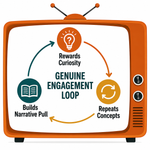
The pattern repeats endlessly: a person living through an ordinary phase of life hits a wall, the wall creates pressure, and the pressure eventually produces an idea, then a product, then an industry. That’s the mechanism behind the anatomy of an idea, from friction to industry, and Bose’s noisy flight is just one visible node on a very long chain of the same story repeating itself. The practical takeaway: start treating your own daily annoyances as data. The thing that bugs you on your commute or in your inbox might be somebody else’s unsolved problem too.
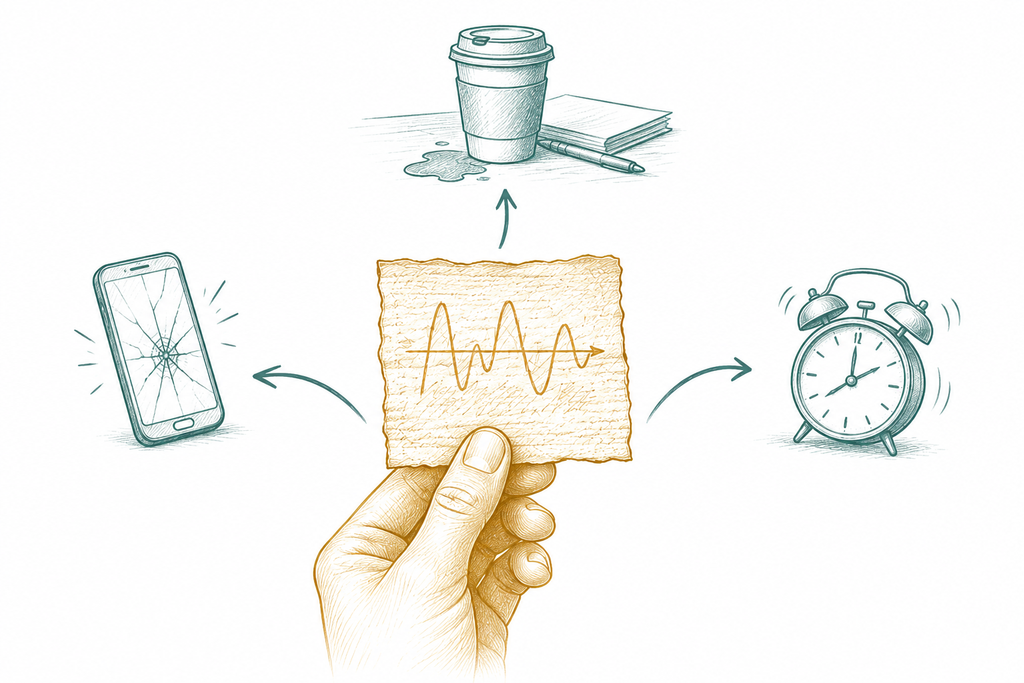
What Bose’s Napkin Teaches Us Today
Put the whole thing together and a few honest, durable lessons survive the retelling even after you strip out the shakier details:
- Firsthand frustration is the real starting point. Bose didn’t research a market gap on a spreadsheet; he lived through one.
- Rough sketches matter more than polished plans. Whether or not there was literally a napkin, the instinct to capture an idea the moment it hits you — messily, immediately — is the transferable habit.
- Long development arcs are normal, not a warning sign. Years of engineering separated the insight from the product, and that’s typical, not a failure.
- Document your own frustrations as they happen. Your “napkin” moment is data, not a distraction — write it down before it evaporates.
The Amar Bose noise-cancelling headphones origin story endures not because every detail checks out, but because the shape of it is so recognizable. Somebody got annoyed. Somebody didn’t shrug it off.
Key Takeaways
- The napkin-and-equations detail is popular corporate lore, not a confirmed historical record.
- The underlying spark — real, firsthand annoyance on a noisy flight — is the credible and useful part of the story.
- Turning an insight into a shipped product reportedly took roughly a decade or more of engineering work, not an overnight breakthrough.
- Friction-driven innovation starts with noticing a gap, not with genius.
- Your own daily irritations are worth writing down; they may be the seed of something bigger.
FAQ: Amar Bose and the Origins of Noise Cancellation
What year did the Amar Bose noise-cancelling headphones origin story take place?
The widely told version places the flight in 1978, though as with much of this anecdote, the exact date comes from secondhand retellings rather than a verified primary source.
Did Amar Bose really write equations on a napkin?
That’s the popular claim, but there’s no publicly confirmed document — notebook, archive, or otherwise — that proves it happened exactly that way. It may be true in substance and exaggerated in detail, which is common with founder origin stories.
How long did it take to turn the idea into an actual product?
Commercial noise-cancelling headphones from Bose arrived years after that flight — commonly described as roughly a couple of decades, though the precise timeline isn’t something we can state with full confidence.
What’s the real lesson from this story?
Less “genius has flashes of insight” and more “friction is a reliable source of ideas.” Bose ran into a specific, personal frustration, and that frustration outlasted the flight.
Keep an Eye on Your Own Noisy Flights
You probably won’t sketch equations on a napkin today. But you likely ran into something this week that didn’t work as well as it should have — an app, a process, a product that made you sigh and think “why is this still like this?” That sigh is worth more than it feels like in the moment. Write it down. Not because you’ll definitely build a company around it, but because most ideas worth having start exactly that plainly: a person, annoyed, refusing to just turn up the volume.
Sources
- The Human Constant (source chapter for this piece)
- Claim that Amar Bose sketched noise-cancelling equations on a paper napkin during a 1978 flight
- Claim/estimate that roughly two decades passed between the napkin sketch and a commercial Bose noise-cancelling product
- Identification of Amar Bose as an MIT professor at the time of the anecdote
- Amazon suggestion-box anecdote details (Charlie Ward, year 2004) referenced only via cross-linked external post, not verified within this piece
- Airbnb investor rejection quote referenced only via cross-linked external post, not verified within this piece
