



















































The Iceberg Model: Why Most Product Ideas Solve the Wrong Problem

By 2000, late fees made up roughly $800 million of Blockbuster’s annual revenue — sixteen percent of the entire company, a figure the company’s own SEC filings put at exactly that share of total revenue — and had triggered numerous class-action lawsuits over the practice, filed in state courts across the country. One of them, Cohen v. Blockbuster Entertainment, reached the Illinois Court of Appeals. That number was public. It was litigated in open court. Any competitor could have pulled it from a filing. Nobody built a company around it until someone did.
That gap — the problem was visible, nobody built for it — is the whole subject of this post. Most people would call that a market inefficiency. We call it the Iceberg Model: most of a human problem sits below the waterline, invisible to a survey.
Key takeaways
- Most human problems are icebergs — the part people will tell you about is a small fraction of what’s actually going on.
- Blockbuster’s late-fee backlash was public, litigated, and complained about for years before anyone built a company around fixing it. Visibility was never the bottleneck.
- Three ways to find the submerged part of a problem: watch behavior, read emotional texture, and be willing to state the obvious.
- The same submerged problem tends to resurface across unrelated contexts — solve at that layer and the product scales further than a single-segment fix.
What the Iceberg Model actually says
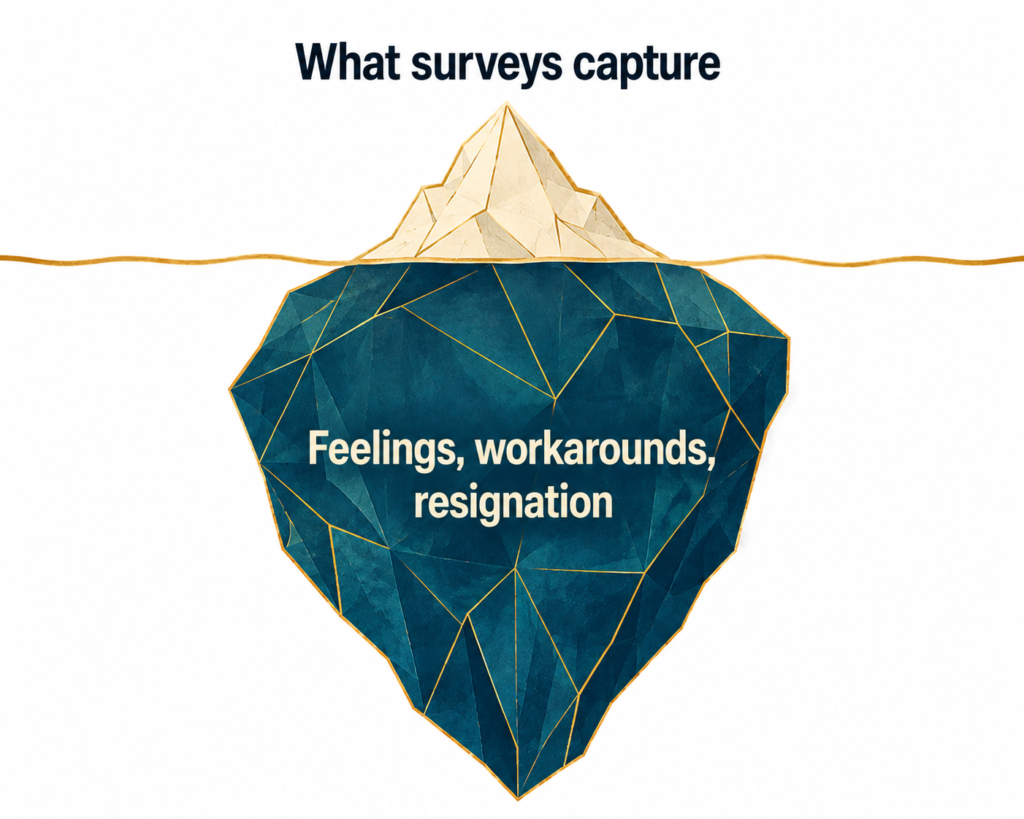
Most human problems are icebergs. The visible portion — what people will tell you if you ask them, what shows up in a survey — is small. The larger mass is submerged: the feelings, the habituated workarounds, the resigned acceptance that this is simply how things are.
Address only the tip and you get a feature nobody hates and nobody loves. Address the submerged mass and you get something that changes an industry. Most product teams never solve for the second kind — not because it’s harder to build, but because it’s harder to see.
That’s the trap: a problem that’s been “known” for years usually hasn’t stayed unsolved because nobody noticed it. It’s stayed unsolved because most people who noticed it stopped at the visible ten percent — the part a survey can capture — built for that, and called it done.
The story everyone tells wrong, and why the real evidence doesn’t need it
Reed Hastings has told a version of Netflix’s origin for years: a forgotten VHS copy of Apollo 13, a $40 late fee, and an irritated drive to the gym afterward. It’s a good story. Netflix co-founder Marc Randolph has called the tidy version of it a “convenient fiction”, and Blockbuster’s own records reportedly never turned up the rental in question. (If you haven’t sorted the real founding story from the marketing version, our Founder Pain as Market Signal piece runs the same audit on Airbnb, Uber, and Diners Club — including the same gap between the clean version of the story and what actually happened.)
Whether the anecdote is true doesn’t actually matter here. The $800 million figure and the wave of lawsuits it drew are the actual evidence, and they were sitting in public filings and court dockets the entire time Blockbuster was still profitable off the same fees that were generating them. The founding myth is decoration. The submerged problem — a customer’s quiet, recurring resentment every time they interacted with the company — was the real thing being solved, and it didn’t need a napkin-sketch origin story to already exist. Stories get remembered. Filings get ignored. That mismatch is the actual failure worth studying, not which version of the anecdote is technically accurate.
Three ways to see the problem under the surface
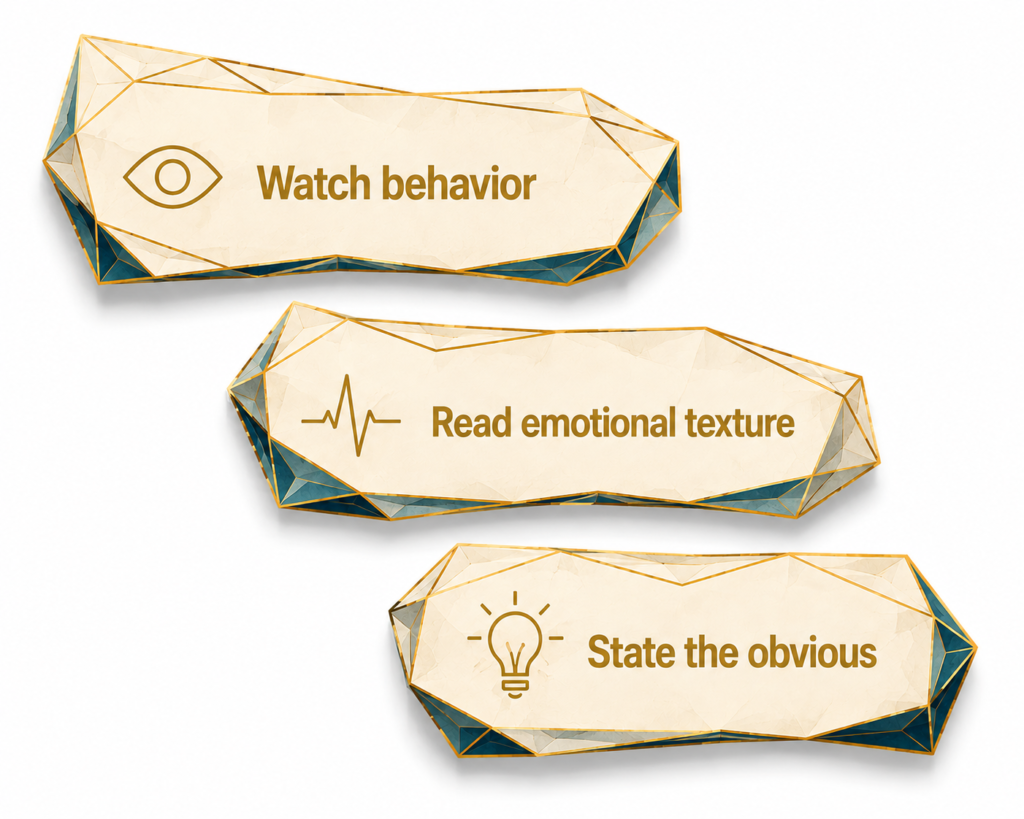
If the submerged 90% isn’t showing up in what customers say, you need a different method than asking them. Three practices, in order:
Watch behavior instead of collecting opinions. What people do under real constraints tells you more than what they say when asked directly. Blockbuster could have surveyed customers about late fees for years and heard “mildly annoying.” The lawsuits told the real story.
Read for emotional texture, not just logistics. A complaint about “late fees” is a logistics problem. A customer’s feeling of being punished, of quietly resenting a company every time they interact with it, is the submerged mass underneath. That feeling is what you’re actually solving for.
Be willing to state the obvious. The best-protected ideas are often not hidden — they’re sitting in plain sight, dismissed as too simple to be worth building. If an idea feels too obvious to bother patenting, that’s usually a sign nobody’s built it yet, not a sign it’s not worth building.
Turn that into something you can actually run this week: next time you’re evaluating a product idea, don’t stop at what customers say in a call or a survey. Audit for three signals instead — a behavior people repeat despite claiming indifference to it, an emotional word (resentment, embarrassment, frustration) that keeps showing up across unrelated complaints, and any problem your own team has already dismissed internally as “too obvious to be worth building.” That third one is usually the tell.
Why the same submerged problem keeps showing up everywhere
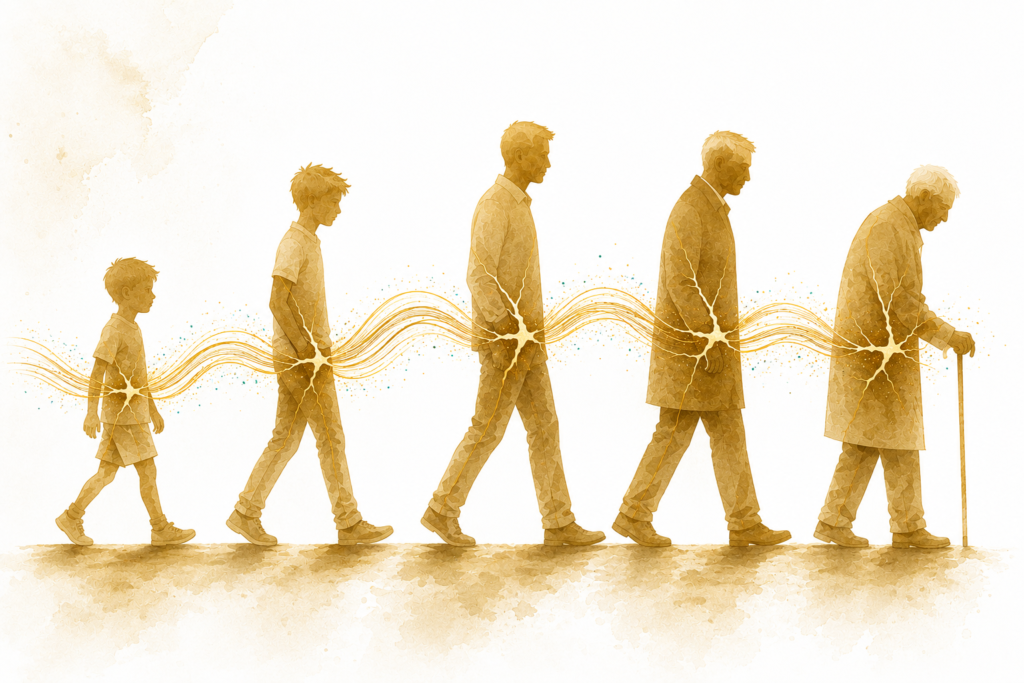
Here’s a pattern worth stealing: the same submerged problem tends to show up wearing a different outfit in every context you look at. Loneliness, for instance, shows up in adolescence, young adulthood, adulthood, middle age, and old age — each stage producing a different visible symptom of the same submerged problem. Solve for the submerged layer instead of the costume it’s wearing this decade, and the product works across more of those stages at once. That’s not a nice bonus — it’s why some products end up serving a market ten times bigger than the one their founders originally scoped.
If you’re auditing your own roadmap, this is a genuinely useful filter: does the problem you’re solving only show up in one customer segment, or does the same submerged friction show up in adjacent ones you haven’t looked at yet? The second kind is where the bigger version of the product usually lives. (Our $1.3 Trillion Problem Nobody’s Pricing Right piece runs this exact filter on one specific life stage — the same submerged loneliness problem, priced out at $1.3 trillion in dementia costs alone once you stop treating it as a mood problem.)
Three invisible problems already sitting in plain sight
The model isn’t just a rear-view mirror for Blockbuster. It’s a flashlight for problems sitting in your own backlog right now, mislabeled as something smaller than they actually are:
- Not “teenagers spend too much time on their phones,” but: teenagers have no reliable way to build a stable identity when their entire social environment is algorithmically tuned to fragment and destabilize identity for engagement.
- Not “old people have health problems,” but: people living thirty-plus years past traditional retirement age have no social, financial, or psychological framework for what that extended time is actually for.
- Not “the gender pay gap,” but: women in their forties and fifties have accumulated exactly the expertise and leadership capacity organizations claim to need, and most organizations still fail to recognize, retain, or use it.
Each of those is a surface complaint rewritten as a submerged problem — and each rewrite is specific enough that you could start scoping a real product against it today.

Applying the Model Beyond Consumer Products
Is the Iceberg Model just “listen to your customers, but better”? Not quite — it’s closer to the opposite. Listening to what customers say is exactly what only captures the visible tip. The model is a case for watching behavior and reading emotional texture instead of, or at least alongside, what people report when you ask them directly.
How is this different from a standard “jobs to be done” framework? Jobs-to-be-done asks what outcome a customer is hiring a product to achieve. The Iceberg Model is a step earlier — it’s about how to correctly identify the real problem in the first place, before you’re far enough along to frame a job around it.
Does this only work for consumer products? No — the three practices (watch behavior, read emotional texture, state the obvious) apply just as well to internal tools and B2B products. Internal teams generate support tickets, workaround habits, and complaint patterns the same way consumers do.
Try the audit this week
Pick one item on your current roadmap. Don’t ask “what do users say about this.” Ask instead: what do they do that contradicts what they say, what emotional word keeps recurring in complaints about it, and has anyone on your team ever waved off a version of this problem as “too obvious to matter.” If you get a real answer to even one of those three, you’ve found more of the iceberg than a customer survey would have given you. That’s a better hour than another round of feature requests.
Sources:
- Adapted from The Human Constant, Chapter 16 — “The Problem That Was Always There”
- Blockbuster Form 10-Q, FY2000 — SEC EDGAR (extended-viewing-fee revenue share)
- Cohen v. Blockbuster Entertainment, Inc. — Illinois Appellate Court
- Marc Randolph on “That Will Never Work” — WBUR On Point


Leave a Reply
You must be logged in to post a comment.
Show Comments