
















































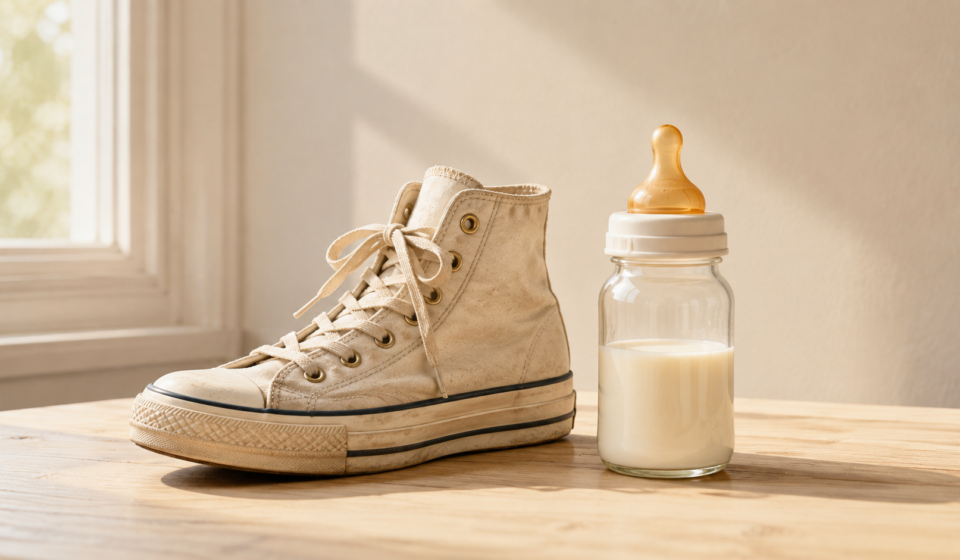
What $70 Billion in Baby Formula Has in Common With $79 Billion in Sneakers

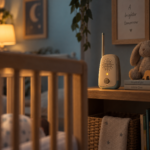
Twenty-month-old Charles Lindbergh Jr. was taken from his crib on the night of March 1, 1932, through a second-floor window, while his parents were in the house. The kidnapping became the crime of the century. Five years later, Eugene McDonald, president of Zenith Radio Corporation, still couldn’t shake it — he rigged a crude microphone-and-receiver setup so he could hear his own daughter’s room from elsewhere in the house, then asked his engineers to build a real version. They came back with two pieces: a transmitter called the Guardian Ear, and a receiver called the Radio Nurse, styled by sculptor Isamu Noguchi into a sleek Bakelite bust. It went on sale in 1938. The baby monitor wasn’t born from a market study. It was born from one father’s fear, made audible. That’s identity-driven spending in its earliest, purest form — and it’s the exact same mechanism running underneath two markets that look nothing alike: a $70 billion baby formula industry, and a $79 billion sneaker industry.
Key takeaways
- The baby monitor, baby formula, and designer jeans all sold something other than their literal product — safety, protection, and belonging, respectively.
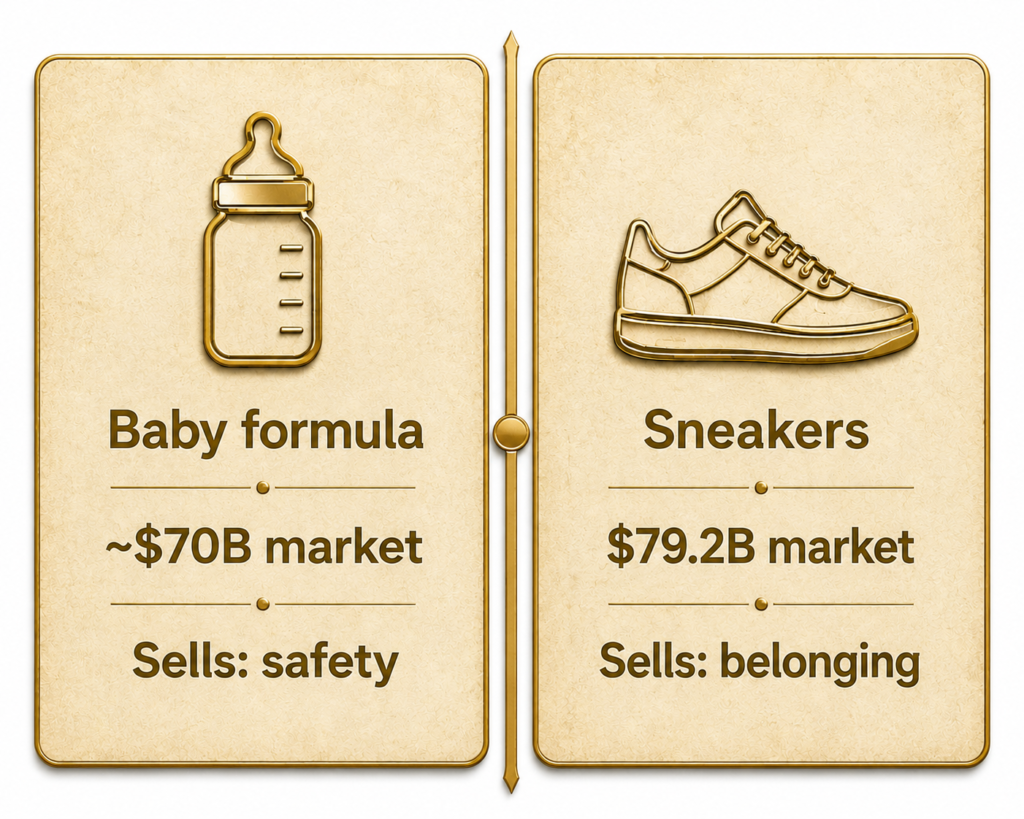
- Baby formula is roughly a $70 billion global market. Nobody is really buying “nutrition” at that scale — they’re buying a parent’s ability to feed a child they can’t breastfeed, and the anxiety relief that comes with it.
- The modern $79 billion global sneaker market runs on the same mechanism denim jeans ran on in the 1950s: not clothing, but identity and belonging, made wearable.
- The practical takeaway: whatever you’re building, ask what emotional need is actually being purchased underneath the literal product category — that’s usually where the real market size lives.

Baby formula: buying safety, not nutrition
In 1865, German chemist Justus von Liebig created the first commercial infant formula — a powder of cow’s milk, wheat flour, malt flour, and potassium bicarbonate, developed in response to staggeringly high infant mortality from malnutrition among babies who couldn’t be breastfed. It was imperfect by modern standards. It was also the first product ever engineered specifically to solve that exact friction. Today, the global infant formula market is worth somewhere in the range of $60-80 billion annually, depending on how it’s measured — call it roughly $70 billion.
Nobody spends at that scale because they’re evaluating powdered nutrition on its technical merits. They’re spending because an infant cannot tell you what it needs, and every dollar in that market is downstream of a parent trying to close the gap between a wordless signal and a real answer. That’s the same instinct that built the Radio Nurse: not a product decision, a fear being addressed directly.
Jeans and sneakers: the same identity-driven spending, updated
In the early 1950s, denim jeans were workwear — cheap, durable, nothing anyone would call a fashion statement. Then Marlon Brando wore them in The Wild One in 1953, and James Dean wore them in Rebel Without a Cause in 1955, and something shifted permanently. Jeans became the uniform of a generation defining itself against its parents — not because the fabric changed, but because the adolescent brain treats social exclusion as something close to physical danger. An adult who wears the wrong brand to a work event is mildly embarrassed. A teenager who wears the wrong brand to school can experience it as an existential threat.
That exact mechanism is still running today — it’s just wearing different material. The global sneaker market was valued at approximately $79.2 billion in 2023. Nobody is buying that scale of sneaker at “shoes that protect your feet” prices. They’re buying the same thing James Dean was selling in 1955: a wearable, visible answer to the question every adolescent is quietly asking, am I one of us?
What is your product actually selling?
This is the same pattern our Iceberg Model piece covers from a different angle: the visible product — formula, denim, a sneaker — is never the whole story. The submerged need underneath it (protection, belonging) is where the actual market size comes from, and it’s usually much bigger and much more durable than the literal product category suggests. A company that understands it’s selling anxiety relief, not powder, makes different decisions than one that thinks it’s competing on nutritional formulation.
Run the audit on whatever you’re building: if you stripped away the literal product description, what emotional need would still be getting paid for? If you can’t answer that in a sentence, you may not actually know what market you’re in. (The same identity-driven-spending pattern shows up again later in life — see our piece on the eldercare market nobody is pricing right for the version of it most companies are still getting wrong.)
Does the Pattern Hold Outside These Two Markets?
Is $70 billion the “real” size of the baby formula market? Estimates genuinely vary by research firm and methodology, roughly $58-86 billion depending on the source and year. $70 billion is a reasonable representative figure within that range, not a single precisely agreed-upon number — worth knowing if you’re citing it precisely elsewhere.
Isn’t this just saying “brands sell emotion,” which is old marketing advice? It’s more specific than that. This isn’t about brand perception layered on top of a product — it’s about the actual size of the market being explained by the underlying need, not the product category. The formula market isn’t $70B because parents love powder; it’s $70B because parental protection instinct is close to universal and extremely durable.
Does this pattern apply outside consumer products? Yes — B2B buyers have their own version of “am I one of us” (career risk, being seen as credible by peers) and their own version of protection instinct (avoiding blame if a decision goes wrong). The literal product is rarely the whole story there either.
Try this
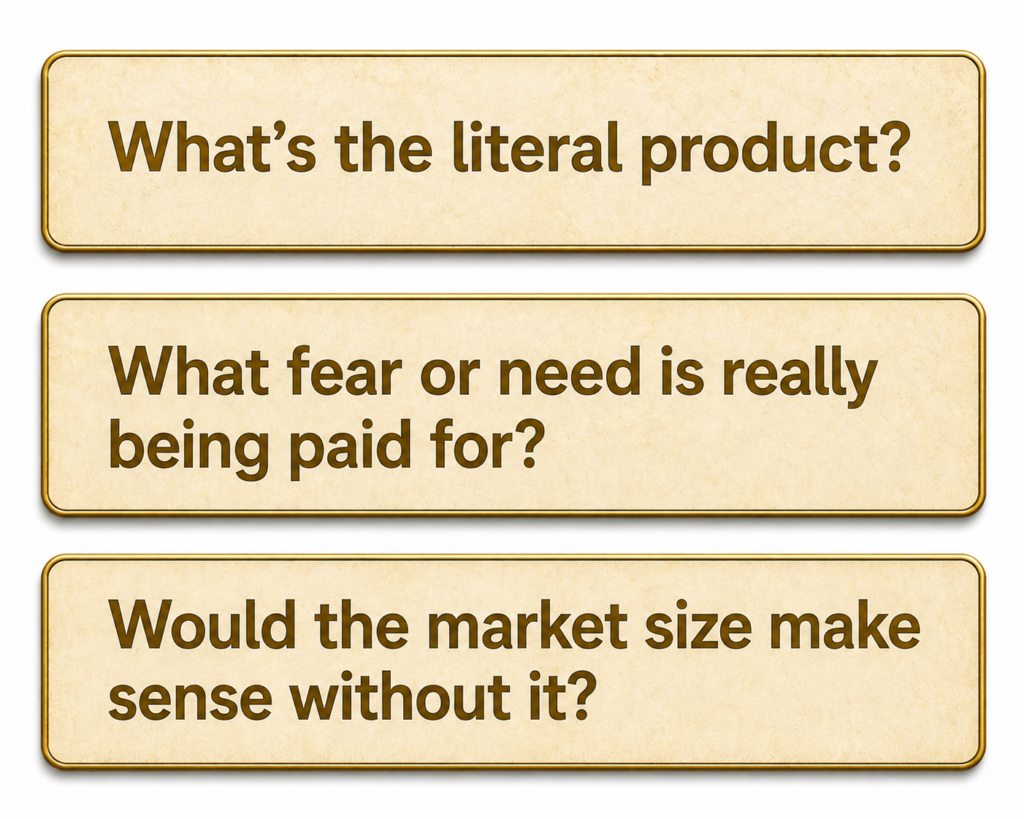
Pick your own product or the one you use most in your daily work. Write down its literal category in one phrase. Then write down, honestly, what fear or need is actually being paid for underneath that category. If those two descriptions are basically the same thing, you’re probably underpricing or under-marketing what you’ve actually built.
Sources:
- Adapted from The Human Constant, Chapter 4 — “Before You Know Your Name” and Chapter 6 — “The Belonging Wars”
- Zenith Radio Nurse — The Henry Ford
- Liebig’s Soluble Food for Babies and the origin of infant formula
- The Global Sneaker Market Size — Cognitive Market Research
- From Brando to Woodstock — Levi’s on denim’s cultural history
