




















































Why AI Makes the Human Constant More Valuable, Not Less

By the end of January 2023 — roughly two months after its public launch — ChatGPT had reached 100 million users, the fastest adoption of any consumer technology in history, faster than TikTok, faster than Instagram. The obvious question that adoption curve raises is whether AI has finally removed the human from the center of innovation. The answer showed up in the data almost immediately, and it wasn’t the one people expected: those hundred million users weren’t building nuclear reactors or solving climate change in their first session. They were writing emails, planning meals, processing emotions, drafting messages to difficult colleagues. The most advanced AI system in human history was being used, at scale, to solve problems from the most ordinary human life phases. AI changes the tools available to serve human needs. It does not change which needs are worth serving.
Key takeaways
- AI cannot feel a need, experience a want, or suffer a problem — the raw material of every product idea remains exclusively human, no matter how capable the tooling gets.
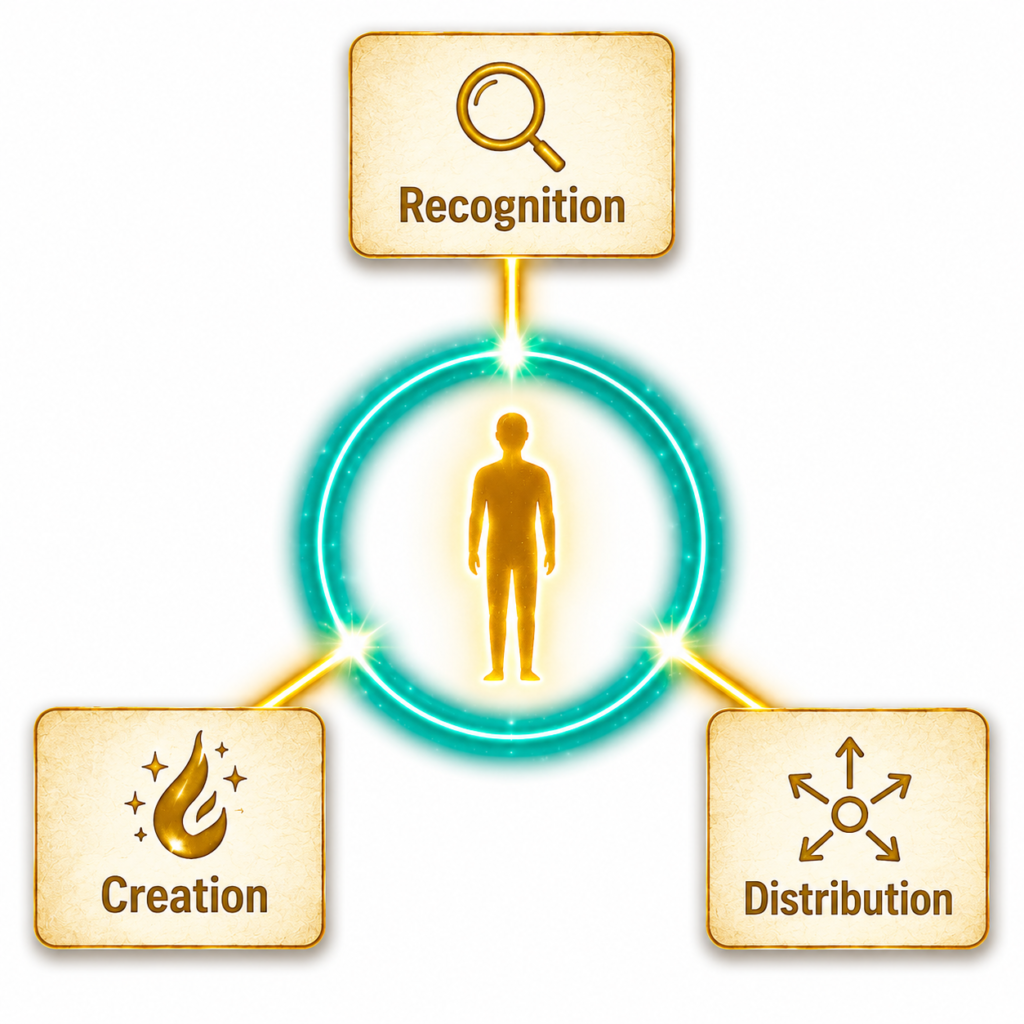
- AI changes three concrete things about how ideas become products: it accelerates identifying frictions, compresses the development cycle, and lowers the barrier to building.
- Applying the book’s own framework reflexively: AI is itself becoming a financial instrument, the kind that emerges around a human need and then loops back to reshape it.
- The practical takeaway: as AI commoditizes technical execution, the scarce, valuable skill shifts to genuinely understanding what people need — hire and build for that, not just for AI fluency.
What AI actually changes
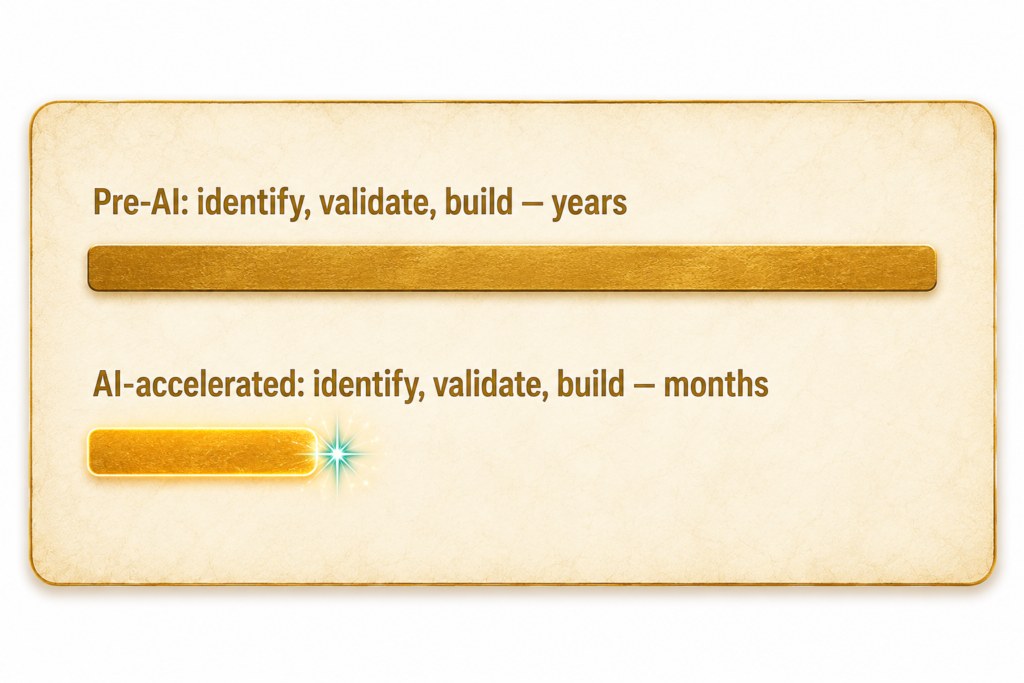
Artificial intelligence changes three specific things about how an idea becomes a product, not the idea’s origin. First, it dramatically accelerates identifying life-phase frictions — patterns in what people struggle with that used to take years of qualitative research to surface. Second, it compresses the development cycle — building and testing a first version now takes weeks, not quarters. Third, it lowers the barrier to building at all, putting product creation within reach of people who couldn’t have shipped anything five years ago. Put together, these three shifts accelerate the entire feedback loop: a need that once took a decade to identify, validate, and productize can now move from AI-assisted analysis to AI-assisted prototyping to market in months.
None of that changes what’s worth building. It changes how fast you find out whether you were right.
AI as the newest financial instrument
Here’s where the book’s own framework gets interesting when you point it back at itself: financial instruments emerge from human needs and loop back to reshape the life phases that created them — and AI itself now fits that description. It’s a technology that amplifies the commercial value of human needs by identifying, serving, and monetizing them at a scale nothing before it could match. Amazon’s recommendation systems serve the adult desire for time-efficient discovery. Netflix serves the universal wish for entertainment matched to a particular mood. Spotify serves the wish for music that feels like it understands who you are. None of these companies invented those needs. AI just made serving them dramatically more precise and more scalable — which is exactly the same loop-closing move we traced in our Four-Stage Feedback Loop piece: an industry scales, then generates the instruments that reshape the need it started from. AI is that instrument, arriving industry by industry, and it’s also compressing the exact idea-to-execution pipeline our Six-Step Framework piece maps in full.
That reframes the competitive question. When delivery gets commoditized — and AI commoditizes delivery faster than almost anything before it — the thing that actually determines who wins isn’t who has the best model. It’s who has the clearest read on what people truly need in the first place. AI makes the human constant more valuable, not less, precisely because it makes everything downstream of that insight cheaper to build.

The one human skill AI can’t automate
As AI automates the technical and analytical work of building, the skill that can’t be automated gets more valuable, not less: the distinctly human capacity for empathy — the ability to feel, rather than merely calculate, what another person needs. The founders who build the most significant companies of this era won’t be the ones with the deepest technical knowledge of AI systems. They’ll be the ones with the deepest knowledge of the human constant — the same needs, wants, and frictions this book has been tracing across every life phase.
Run that as an actual audit on your own team: are you hiring and building for AI fluency, or for genuine insight into what your users need? Both matter, but only one of them gets more scarce — and more valuable — as the other gets commoditized. If your roadmap is entirely “what can we now build faster,” and never “what have we actually understood better,” you’re optimizing the half of this equation that’s rapidly becoming table stakes.
What’s Changed Since This Was First Written
Does this mean AI doesn’t matter for competitive advantage? No — it means AI is table stakes faster than people expect, and table stakes don’t confer advantage for long. The advantage shifts to whoever pairs the same accelerated tooling with a sharper read on the actual human need, the same way electricity mattered enormously but wasn’t itself the source of competitive advantage once every factory had it.
Isn’t “AI can’t feel empathy” just a reassuring thing to tell ourselves? It’s a claim about what AI does, not a comfort blanket — pattern recognition and generation at scale are genuinely different operations from experiencing a need firsthand. Nothing here claims AI won’t get better at simulating empathetic responses; the claim is narrower and more durable: it doesn’t have needs, wants, or fears of its own to draw on, which is the actual raw material every product idea in this book traces back to.
Is the “100 million users in two months” figure still the right way to think about ChatGPT’s scale? It was the right figure for early 2023, and it’s still the right anecdote for illustrating adoption speed — but the scale has moved on substantially since. By early 2026, OpenAI reported ChatGPT had grown past 900 million weekly active users, more than double the figure from a year earlier. The 100-million number is the origin story; it’s not current scale.
Try this
Look at your last quarter’s product roadmap. For each initiative, ask honestly: did this get greenlit because AI made it newly possible to build, or because it addresses a need you understood clearly before AI ever entered the conversation? If most of your roadmap is the first kind, you’re building fast in a direction nobody’s confirmed is right yet.
Sources
- Adapted from The Human Constant, Chapter 19 — “The Constant in the Age of AI”
- ChatGPT sets record for fastest-growing user base — Reuters
- OpenAI: ChatGPT now has 900 million weekly active users — Search Engine Land
