












































Every financial instrument ever created is humanity admitting a problem. Not solving one with genius — confessing to one out loud. That’s the frame this piece runs on, and it’s the only way to make sense of how a phone company reportedly became a three-trillion-dollar company by inventing almost nothing. Call it the Apple Paradox: the biggest wins in business history didn’t come from creating desire. They came from reading friction that already existed, more accurately than anyone else was reading it.
Every Financial Instrument Is a Confession
Money, coins, paper notes, insurance policies, bank accounts, credit cards — none of them showed up because someone had a flash of brilliance in a bathtub. They showed up because a specific group of people hit a specific wall and needed a way through it. The instrument is the residue of the friction, not a triumph over it.
That’s a harder story to tell than “genius invents thing,” which is probably why it doesn’t get told very often. But it’s the more useful one if you’re trying to build something that lasts. The biggest companies in history didn’t manufacture demand out of nothing — they noticed pain nobody had priced yet.
The Double Coincidence of Wants: Why Barter Failed
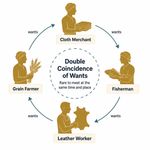
Picture a medieval marketplace. A cloth merchant has fabric and needs fish. The fisherman needs leather. The leather worker needs grain. The grain farmer needs cloth. On paper, everyone in that square has something someone else wants — a closed loop, tidy and self-balancing.
In practice it almost never worked, because the cloth merchant and the fisherman were rarely standing in the same spot at the same time, each holding exactly what the other needed at that exact moment. Economists have a name for this: the double coincidence of wants, generally cited as the core problem money was invented to solve. When humanity invented money, it wasn’t celebrating a breakthrough. It was admitting barter was broken and nobody could fix the timing problem, so they built around it instead.
From Iron Coins to Paper: A Progression of Confessions
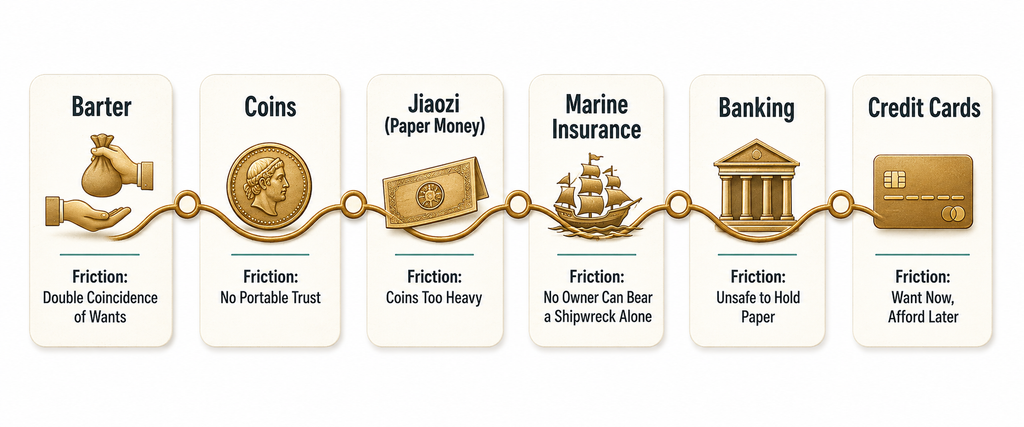
Coins are usually dated to roughly the seventh century BCE, with early forms appearing more or less independently in places like Lydia, China, and India — though the exact chronology is debated among historians and worth treating as approximate rather than fixed. What’s not really in dispute is the motive: traders needed something portable, divisible, durable, and universally trusted. The coin was an admission that barter’s coincidence problem needed a permanent workaround.
Centuries later, Sichuan had a different confession to make. Its currency was iron coin, and iron is heavy in a way silver and copper aren’t. By some historical accounts, a thousand large iron coins weighed in the neighborhood of 25 catties — something like 33 pounds — and buying a single bolt of silk could reportedly take ninety catties of coin or more. A merchant closing an ordinary trade wasn’t carrying money so much as hauling it, sometimes by cart, sometimes with a hired porter, for a transaction a modern wallet would clear in a second. These figures come down through historical retellings rather than a single verified ledger, so treat the specific numbers as illustrative of the scale of the problem rather than an audited fact.
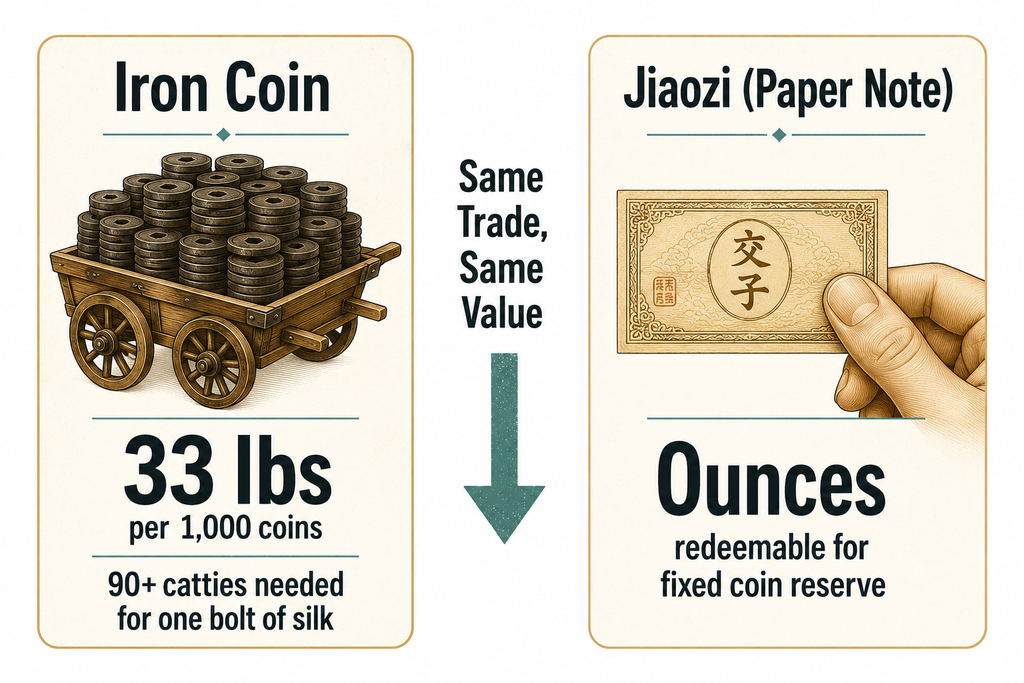
Sometime around the early 1000s CE, a group of Chengdu merchant houses — commonly put at sixteen in the popular retelling — reportedly stopped hauling iron and started printing paper instead: notes called jiaozi, each one redeemable for a fixed amount of coin held in reserve. Not a government mandate. A group of businessmen tired of the same physical problem, arriving at the same fix, in the same city.
Insurance confessed something else entirely. By the late seventeenth century, as the popular history goes, Edward Lloyd’s coffee house in London had become the place where ship captains, merchants, and underwriters traded news of the sea — which vessels made it home, which were overdue, which went down in a storm. That same room where the news traveled eventually became the room where the bets got made: merchants willing to wager, for a fee, that a given ship would arrive safely; shipowners willing to pay that fee rather than absorb a total loss alone. Marine insurance didn’t start as an industry. It started as anxious gossip that turned into a hedge. The confession underneath it: no single owner could carry a shipwreck alone.
Banking confessed that holding paper yourself was its own risk — theft, fire, a lost strongbox. Credit cards confessed something more intimate: we want things now that we can’t yet afford. Notice the pattern across all of it — unbearable weight, unbearable risk, unbearable insecurity. Each instrument names a specific pain point before it solves anything.
The Apple Paradox: Reading Needs Instead of Creating Them
In January 2022, Apple reportedly became the first company in history to touch a market capitalization of three trillion dollars — a headline milestone worth treating as a notable, widely reported figure rather than an audited constant, since market cap moves by the minute.
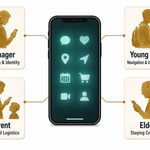
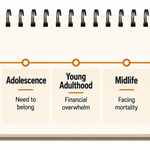
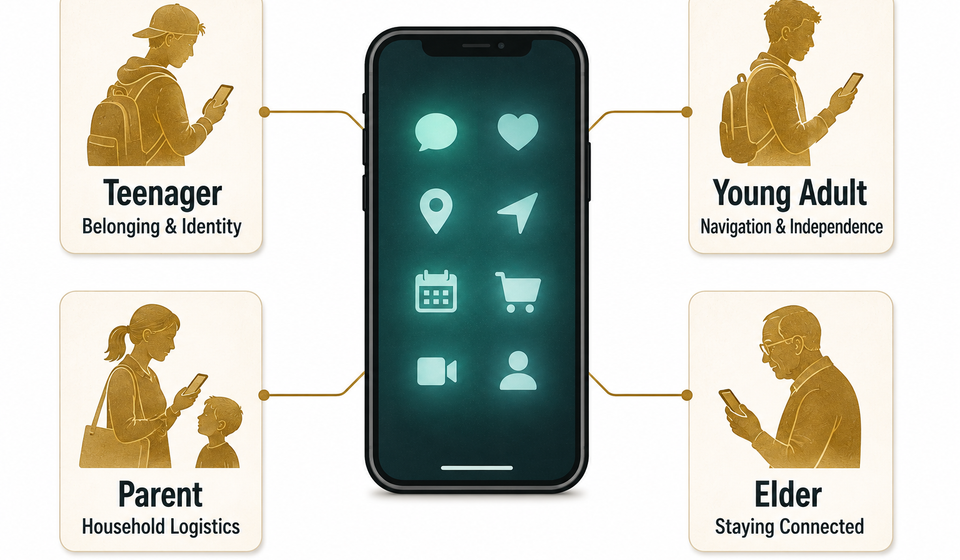
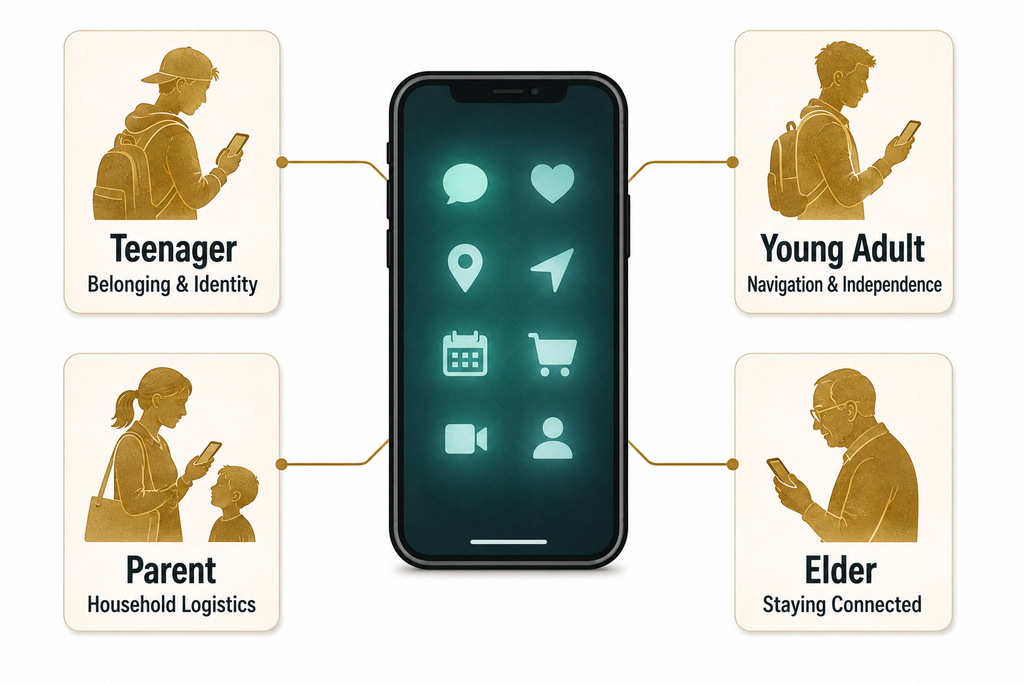
The number isn’t really the interesting part. The interesting part is how it got there. Apple didn’t invent a new human desire. It read old ones with unusual precision, across several life phases at once. The teenager uses the device to signal belonging and identity. The young adult uses it to navigate, communicate, and manage the sprawl of independent life. The parent uses it to run household logistics. The elder uses it to stay connected to people who’d otherwise drift out of reach. Same object, four different confessions, sold once.
That’s the Apple Paradox in one sentence: you don’t need to create demand if you can read it accurately enough, across enough people, at the same time.
What Apple Shares With Coins and Coffee-House Insurance
Strip away the aluminum and the retail theater, and Apple is running the same play as jiaozi and Lloyd’s — friction, multiplied across millions, met with something durable enough to stick. That’s what “financial instruments as confessions” really means once you extend it past money itself: any product that survives at scale is confessing to a need it didn’t invent.
The practical version of this lens: map the specific friction first, then map the life phases it multiplies across. A founder chasing a clever idea before locating the friction is building the jiaozi before anyone’s tired of hauling iron. This same idea — that products don’t create needs so much as they answer a need already sitting in a specific phase of someone’s life — is explored at more length in the eight-step path from friction to industry, which traces how that pattern repeats from the first stone tool onward.
The Next Confession: 1.4 Billion Unbanked Adults
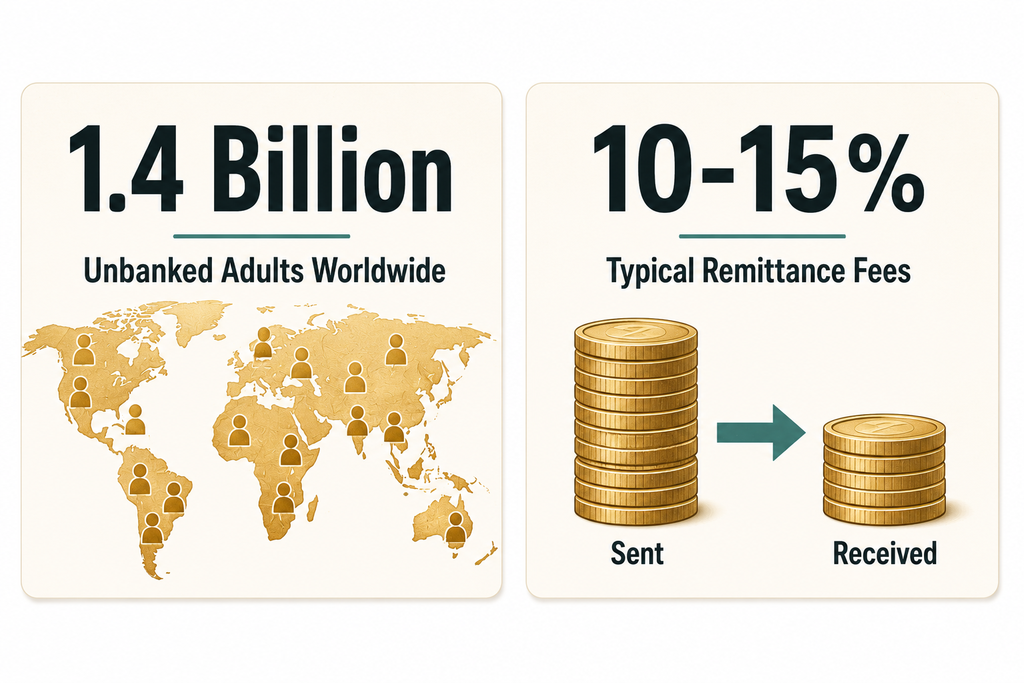
The next big confession is already visible, if you know where to look. Estimates commonly cited by organizations tracking global financial access put the number of unbanked adults worldwide at somewhere around 1.4 billion, though the precise figure shifts by survey year and methodology and shouldn’t be treated as a fixed census. Meanwhile, workers sending money home from developing economies are often cited as paying remittance fees in the rough range of ten to fifteen percent — again a figure worth treating as directionally right rather than exact.
The friction is real, large, and — as of this writing — still mostly unsolved at scale. Somewhere, a founder is reading that friction right now the way Chengdu’s merchant houses read the weight of iron coin, or the way Apple read a teenager’s need to belong. The company that reads it most accurately gets the confession named after it.
Key Takeaways
- Every major financial instrument in history — coins, paper money, insurance, banking — emerged from an admitted human problem, not a flash of invention.
- The double coincidence of wants explains why barter collapsed and money had to exist.
- Apple’s reported three-trillion-dollar valuation milestone came from addressing real needs across teen, young adult, parent, and elder life phases simultaneously — not from manufacturing new desire.
- The next trillion-dollar company will likely be built by whoever reads an existing, unsolved friction — like global unbanked populations — as precisely as Apple read its own market.
- Specific historical figures (coin weights, dates, fee percentages) in this piece are drawn from commonly cited popular accounts and should be treated as illustrative rather than audited fact.
FAQ
What is the “Apple Paradox”?
It’s the observation that Apple’s scale came not from inventing new human desires but from reading existing needs — belonging, independence, logistics, connection — with unusual precision across different life stages at once.
What is the double coincidence of wants?
It’s the classic economic problem where two people can only barter directly if each happens to have exactly what the other wants at the same time — a coincidence rare enough that money had to exist to route around it.
Did Apple really hit a $3 trillion valuation?
Apple reportedly crossed a $3 trillion market capitalization briefly in January 2022, a widely covered milestone at the time — though market cap is a moving number, and readers should treat the exact date and figure as a headline data point rather than a permanently fixed fact.
How many people are unbanked worldwide?
Commonly cited estimates put the figure around 1.4 billion adults, though the number varies by source and survey year.
Why does this matter for founders?
Because it flips the usual pitch-deck instinct. Instead of asking “what can we invent,” the more useful question is “what friction already exists, and across how many life phases does it repeat?”
Sources
- The Human Constant (source chapter for this piece)
