








































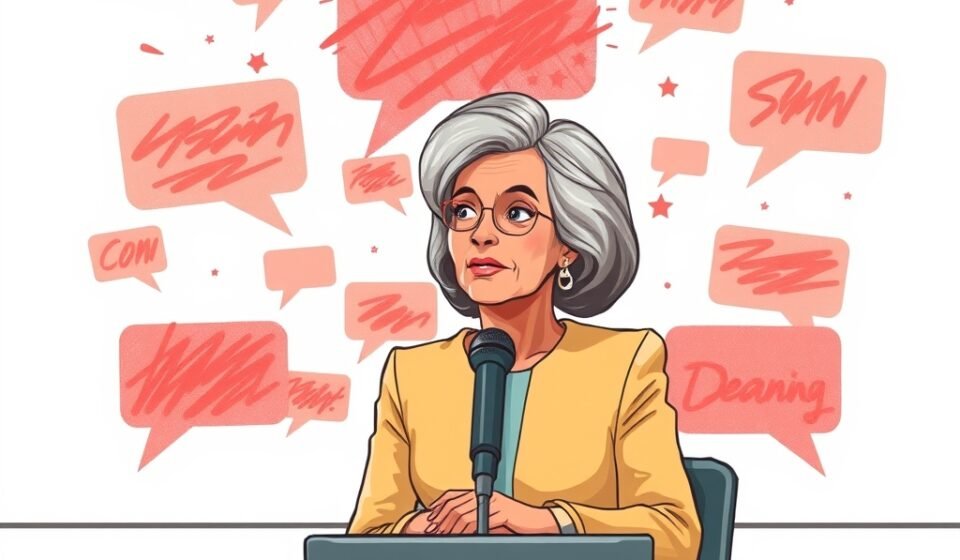

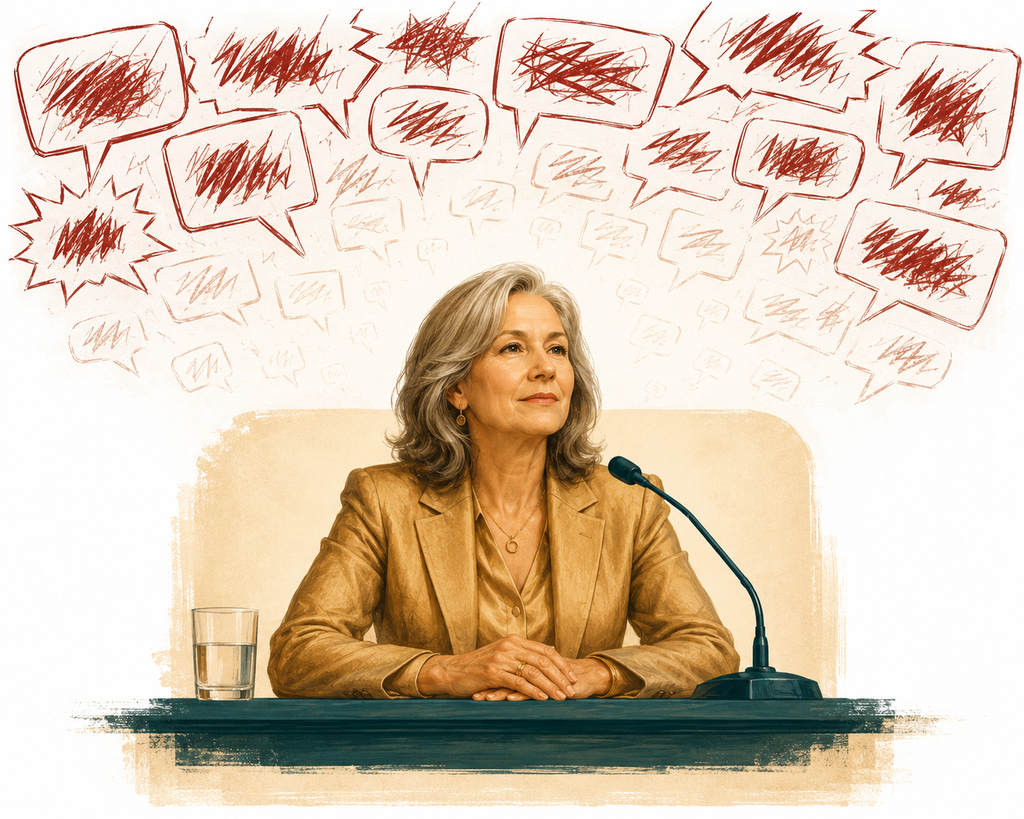
In 2013, a Cambridge classics professor said something reasonable on live television, and the internet decided to talk about her hair instead. That’s the whole shape of this story: an argument nobody remembers, followed by a reaction nobody should be proud of, followed — years later — by the slow realization that the reaction was pointing at something real. Middle-aged women had been rendered invisible, culturally and commercially, and almost nobody noticed until one of them refused to disappear quietly.
The Backlash That Wasn’t About the Argument
Mary Beard appeared on the BBC’s Question Time in 2013 and gave a measured, evidence-based take on immigration. It was the kind of contribution you’d expect from a tenured classicist: careful, unshowy, correct in the way academics are correct. The response had nothing to do with any of that. One reviewer wrote that she was too unattractive for television and ought to be kept off the screen entirely. Beard, in her late fifties at the time, gray-haired, wearing no makeup, did what she’d apparently always done: she answered calmly, precisely, and without flinching.
Here’s the part that matters beyond the news cycle. The backlash wasn’t really about Beard. It was a tell. When critics run out of arguments and reach for a woman’s appearance instead, they’re revealing an assumption baked deep into the culture — that a middle-aged woman’s value is measured by how closely she still resembles a younger one. That assumption doesn’t just show up in comment sections. It shows up in product roadmaps, marketing budgets, and R&D spend. Culture and commerce share a blind spot, and this piece is about the size of the market sitting inside it: the menopause economy, and the broader middle-age economy it belongs to.
Middle Age: Where the Body Starts Talking to Mortality
The global wellness industry is enormous — reportedly valued at somewhere around $6.8 trillion a year, though estimates vary considerably by source — and it isn’t driven by twenty-somethings chasing abs or retirees managing chronic illness. It’s driven overwhelmingly by people in the middle. That’s not a coincidence, and it’s not vanity. Middle age is when the body opens its first serious negotiation with mortality: metabolism slows, hormones shift, cardiovascular risk starts climbing off the flat line it held for two decades.
Organic food, fitness memberships, preventive screenings, anti-aging skincare — strip away the marketing language and every one of these categories is a middle-aged person trying to extend, improve, or simply hold onto what they’ve got. That’s not weakness. It’s pattern recognition. The body sends a memo, and the wallet responds. If you’ve ever wondered why the “wellness” aisle skews so heavily toward people who aren’t old and aren’t young, this is the answer: it’s the only demographic getting the memo in real time.
The Menopause Economy: History’s Most Overlooked Market
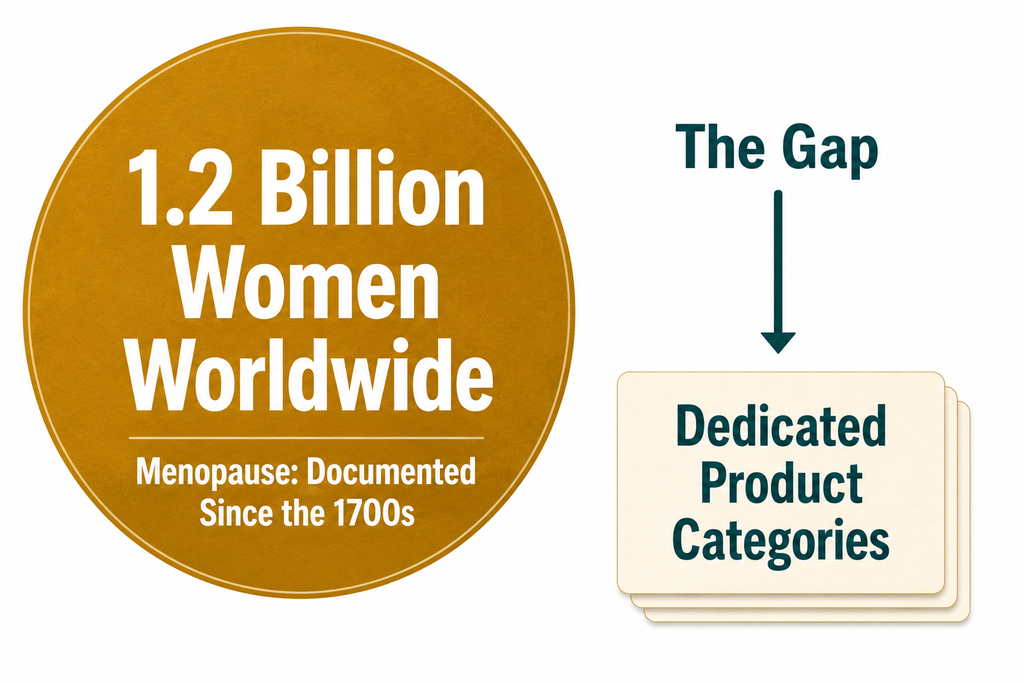
Now narrow the lens to the single most striking case of that blind spot: the menopause economy. Menopause affects an estimated 1.2 billion women worldwide — a number on the scale of a major world religion, not a niche condition, though as with most large-scale market estimates, the exact figures cited across studies and industry reports vary. It is as universal and as predictable as adolescence, with comparable effects on mood, energy, cognition, sleep, and physical capacity. It has been studied medically since at least the eighteenth century, so this isn’t a new discovery hiding in a lab somewhere.
And yet, as of the mid-2020s, it remains one of the most commercially underserved human experiences in existence. Sit with that for a second. An experience nearly as universal as puberty, documented for roughly three hundred years, still lacks the dedicated commercial infrastructure that teenage skin got decades ago. That’s not an oversight. That’s a market that decided, implicitly, that women stop being customers worth designing for right around the time they stop being visibly young. The takeaway isn’t just “there’s a gap” — it’s that a near-universal, well-documented biological event with almost no built-for-it product category is about as clear a signal of unmet demand as any industry analyst could ask for. For more on how a single overlooked friction point can define an entire market, see the anatomy of an idea from friction to industry.
Nobel’s Obituary and the Legacy Economy
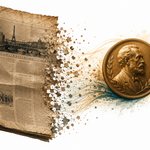
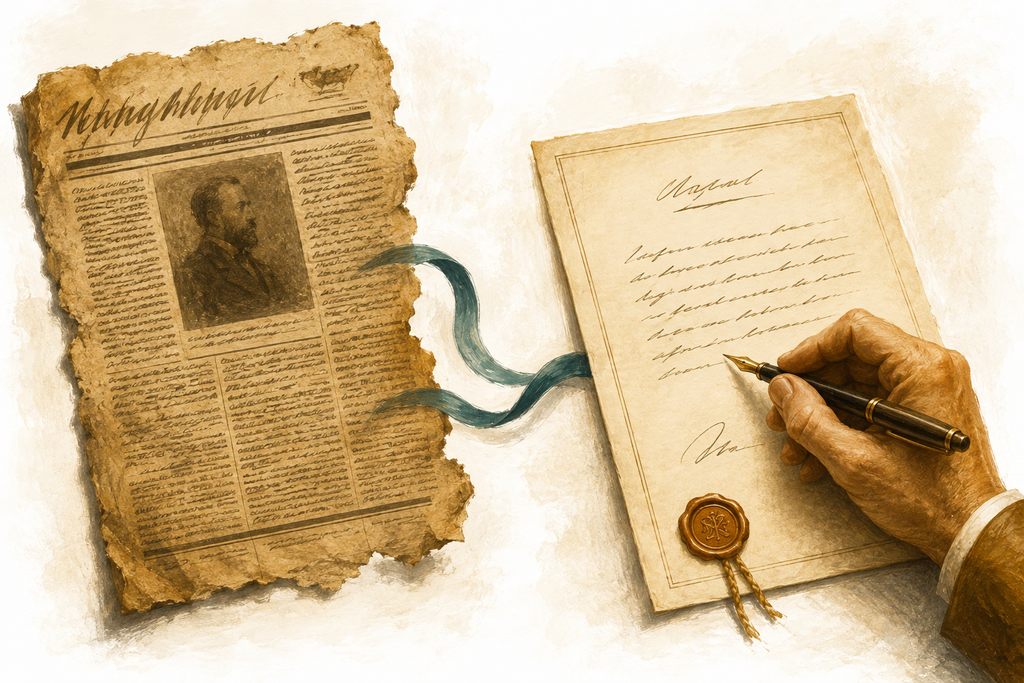
Middle age doesn’t just look at the body. It looks at the ledger of a life and asks what’s going to outlast it. There’s a story, often told a little too dramatically, about Alfred Nobel. In April 1888, a French newspaper mistakenly reported his death — it was actually his brother Ludvig who had died in Cannes. The real obituary, by most accounts, was brief and unflattering: something to the effect that a man who could hardly be called a benefactor of humanity had died, the inventor of dynamite. It was corrected the next day.
The more theatrical version people love to repeat — a headline reading “The Merchant of Death Is Dead” — appears to be a later embellishment. Historians have reportedly never been able to verify that it actually ran anywhere. But the core incident seems to have happened, and it’s unsettling enough without the embellishment: a living man got an early, unflattering preview of how history intended to remember him. Seven years later, Nobel rewrote his will and left the bulk of his fortune to create the prizes that now carry his name. Nobody can say with certainty what moved him. But the timing is hard to look past.
That instinct — to build something that outlives you — isn’t a late-life afterthought bolted on after retirement. It’s a middle-age developmental feature, and it generates real economic activity: philanthropic foundations, impact investing, endowment creation. The practical takeaway is blunt: if legacy-building is a middle-age impulse rather than an old-age one, it belongs in financial and career planning a decade or two earlier than most people schedule it.
Why LinkedIn Is Secretly a Middle-Age Product
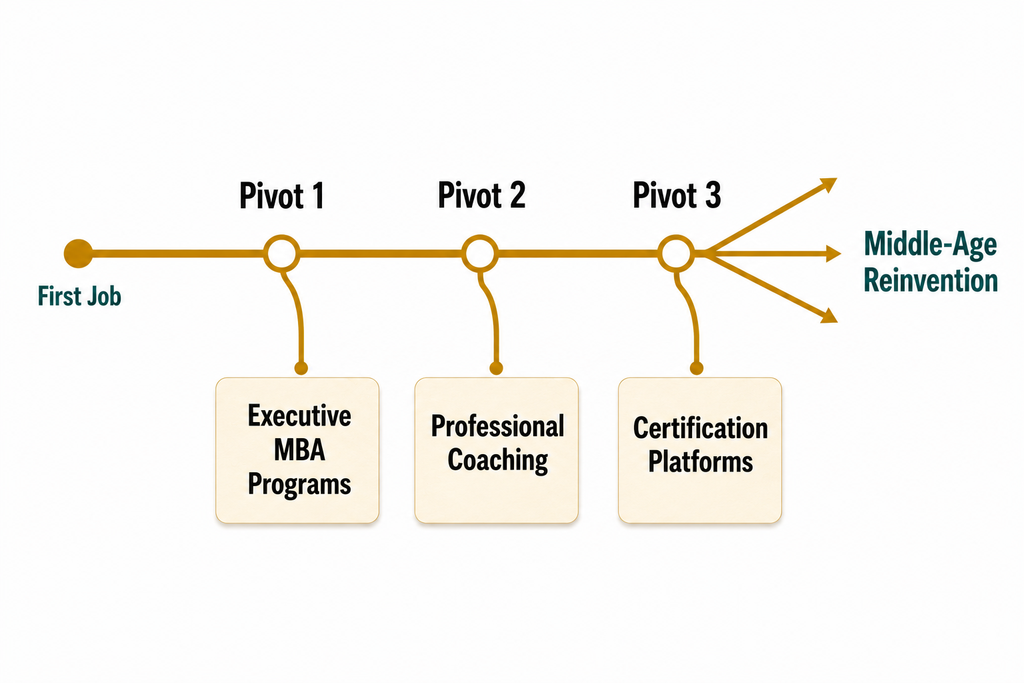
The single-career life — one job, one industry, one identity from graduation to retirement — is functionally obsolete. Most professionals now change not just employers but industries and professional identities multiple times over a working life. That churn has built its own economy: executive MBA programs, life coaching, online professional-learning platforms, and an entire certification industry that didn’t really exist a generation ago.
LinkedIn’s core value proposition, stripped of its networking-app branding, is a middle-age product. It’s not built for someone starting their first job. It’s built for someone reinventing their fourth. The practical takeaway here is that reinvention has quietly become a recurring, expected life stage rather than an emergency measure — and the industries serving it are designed around the needs of people navigating a pivot, not people navigating an entrance.
What the Market Missed — and What It’s Waking Up To
Pull the threads together and the shape is unmistakable. Beard’s fight for visibility wasn’t a side story about one professor’s dignity — it was the cultural symptom of an economic condition. Middle-aged women, and middle age generally, have been treated as a demographic in decline rather than a demographic in transition, and industries priced their offerings accordingly. But the menopause economy alone — 1.2 billion women, centuries of documentation, thin commercial infrastructure — makes the “decline” framing look less like an insight and more like a missed opportunity sitting in plain sight.
Wellness spending, legacy-building, career reinvention: none of these are middle-age people behaving irrationally. They’re middle-age people responding, quite sensibly, to a phase of life that involves real biological change, real mortality awareness, and real professional churn. A market that finally sees that clearly stands to serve — and profit from — an audience it spent decades looking past. That’s the actual opportunity buried under the menopause economy headline: not charity, not correction, just a very large, very underserved customer base finally getting products built for who they actually are.
FAQ: The Menopause Economy and the Middle-Age Market
How big is the menopause economy?
Menopause affects an estimated 1.2 billion women globally, making it one of the largest addressable health experiences on the planet — though exact global market-size figures for menopause-specific products and services vary widely by source and should be treated as estimates rather than settled numbers.
Why has menopause care lagged behind other health markets for so long?
Partly cultural: middle-aged and older women have historically been underrepresented in advertising, media, and product design, which tends to follow visibility rather than create it. Partly structural: medical research and funding have reportedly focused more heavily on conditions affecting other life stages, leaving a well-documented but under-commercialized gap.
What industries are catching up to the middle-age market?
Wellness and longevity brands, anti-aging and aesthetics companies, and wealth, estate-planning, and philanthropy services are among the sectors increasingly building products around middle-aged consumers rather than treating them as an afterthought.
Is the “re-invention economy” really specific to middle age?
Career pivots happen at every age, but the infrastructure around them — executive MBAs, professional coaching, certification platforms — is disproportionately used by people navigating a second, third, or fourth professional identity, which skews toward the middle of a career, not the start.
Key takeaways
– Mary Beard’s 2013 Question Time backlash targeted her appearance, not her argument — a visible symptom of a broader cultural blind spot toward middle-aged women.
– The roughly $6.8 trillion wellness industry is driven largely by middle-aged consumers responding to real biological change, not vanity.
– The menopause economy involves an estimated 1.2 billion women worldwide and centuries of documented research, yet remains commercially underserved as of the mid-2020s.
– Legacy-building — philanthropy, impact investing, endowments — functions as a middle-age developmental stage, not a late-life afterthought.
– The re-invention economy (executive education, coaching, certifications) exists largely to serve people making a second, third, or later career pivot.
– Together, these point to middle age as an underserved market opportunity rather than a demographic in decline.
If there’s one practical move here, it’s this: stop treating “middle age” as a marketing dead zone and start treating it as the demographic with the most disposable income, the clearest biological triggers, and the least competition for its attention. Somebody’s going to build the products this market has been waiting for. Might as well be paying attention to who.
Sources
- The Human Constant (source chapter for this piece)
- Mary Beard’s 2013 Question Time appearance and the specific critic comment about her appearance/being ‘too unattractive for television’
- Mary Beard’s age (late fifties) at the time of the 2013 incident
- Global wellness industry valuation of approximately $6.8 trillion annually
- Menopause affecting approximately 1.2 billion women worldwide
- Claim that menopause has been studied medically since at least the eighteenth century
- Alfred Nobel’s brother Ludvig Nobel dying in Cannes in April 1888 and the newspaper’s mistaken obituary of Alfred
- Nobel rewriting his will seven years later (implying around 1895) to fund the Nobel Prizes
