



















































The Invisible Problem Framework: How to Spot the Next Billion-Dollar Blind Spot

Can AI find the next Blockbuster-sized blind spot before the lawsuits do? That’s the real test of an invisible problem framework — not whether it produces a nice founder story, but whether it can surface a costly, obvious-in-hindsight friction while it’s still invisible. Most billion-dollar businesses don’t invent a new problem. They notice an old one that everybody was already living with, and name it before anyone else bothers to.
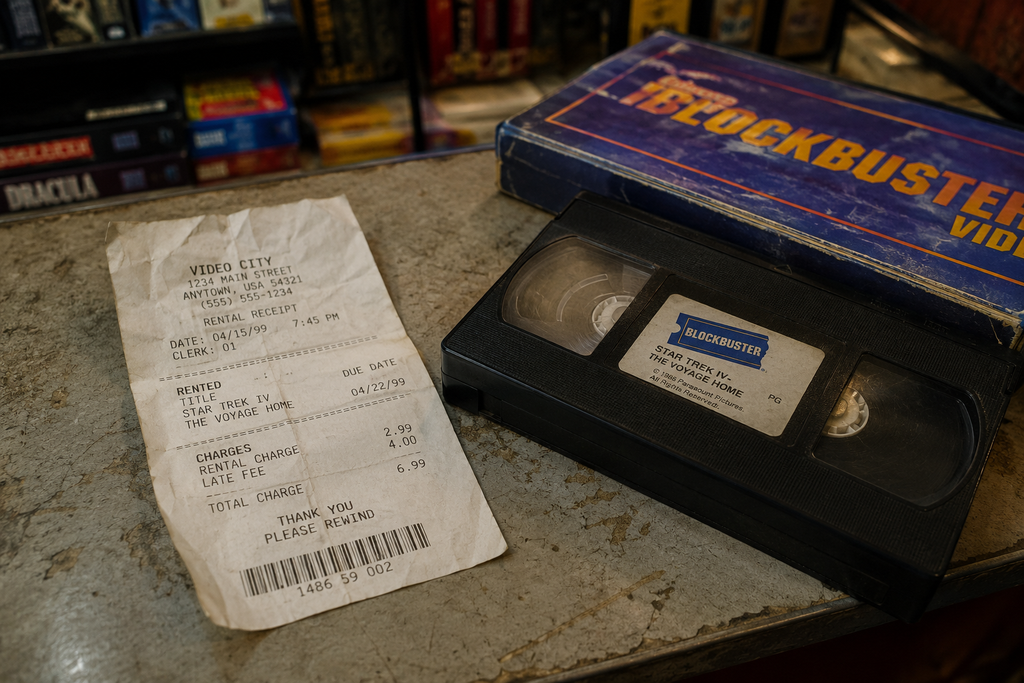
Reed Hastings has told a version of the Netflix origin story for years: a forgotten VHS copy of Apollo 13, a forty-dollar late fee from Blockbuster, and an embarrassed walk to the gym afterward where he realized he paid a flat monthly rate there no matter how often he showed up. It’s a tidy story. Hastings himself has confirmed the late fee actually happened. But Netflix co-founder Marc Randolph has since called the clean, cinematic version of it a “convenient fiction,” and reporting on Blockbuster’s own records reportedly never turned up the specific rental in question. So the anecdote is shakier than the legend suggests — not because Hastings backpedaled on the fee, but because the neat cause-and-effect story built around it doesn’t hold up to scrutiny.
Here’s why that distinction matters for the rest of this piece: the myth is optional. The problem was not.
The Convenient Fiction Behind Netflix’s Origin Story
Strip the anecdote away entirely and the underlying friction still stands on its own, independently documented. Late fees made up roughly $800 million of Blockbuster’s revenue in 2000 — about 16% of the company’s total — and the practice drew enough consumer anger that Blockbuster ultimately offered to settle 23 separate class-action lawsuits over inflated late-fee charges, a settlement package that approached $450 million once coupons, refunds, and legal fees were totaled. What isn’t in dispute is the shape of the problem: this wasn’t a quiet annoyance. It was public, it was litigated, and customers were furious about it for years before anyone built a company around removing it.
That’s the real lesson buried in the Netflix myth. The blind spot wasn’t hidden. It was published, argued in courtrooms, and grumbled about at every return counter in America. Nobody needed inside information to see it. They needed the willingness to take it seriously as a business problem instead of an industry cost of doing business. The Iceberg Model makes a similar point about most product ideas: the visible complaint is rarely the actual problem, just the tip breaking the surface.
Three Practices for Seeing the Invisible Problem
The framework itself is stubbornly simple. Three practices, applied in order.
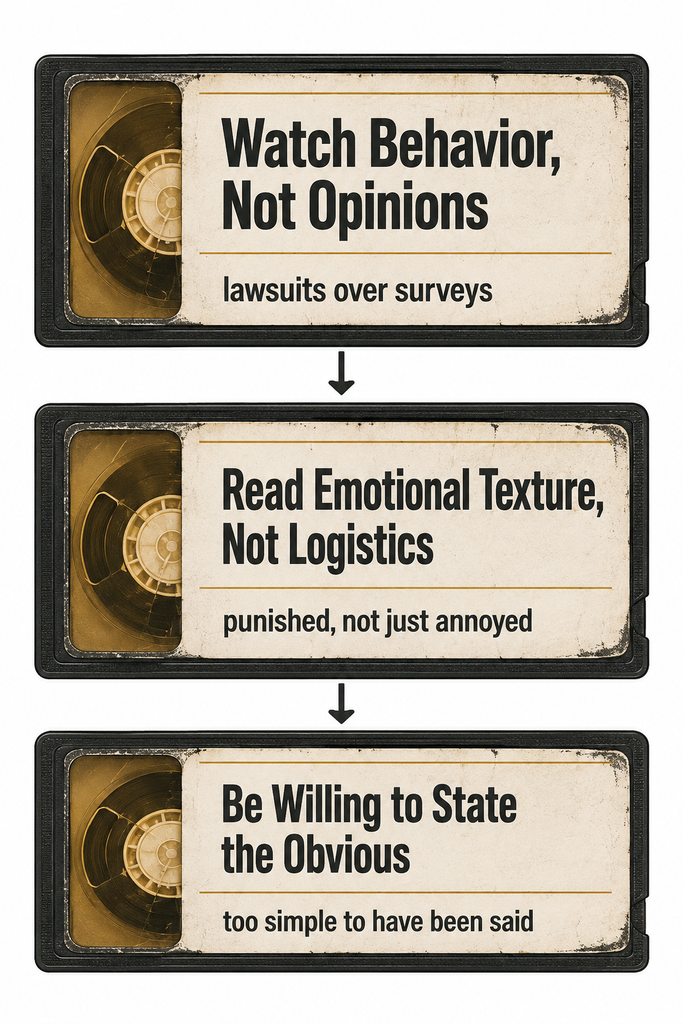
First, watch behavior instead of collecting opinions. What people do under real constraints tells you far more than what they say when you ask them directly. Blockbuster could have surveyed customers about late fees for a decade and heard “mildly annoying” every time. The lawsuits told the real story — people don’t sue over things that are merely annoying.
Second, read for emotional texture, not just logistics. “Late fees are too high” is a logistics complaint. The feeling underneath it — of being punished, of quietly resenting a company a little more every time you interact with it — is the actual thing worth solving. Logistics problems get patched. Emotional injuries get remembered, and remembered injuries are what drive someone to switch providers permanently.
Third, be willing to state the obvious. The best-protected ideas are often not hidden at all — they’re sitting in plain view, dismissed as too simple to be worth building. If naming a problem feels almost embarrassing in how obvious it is, that’s frequently the signal you’re looking at the real one. Discomfort with simplicity is not evidence you should look elsewhere.
Run any market you’re evaluating through these three checks before you write a single line of a business plan. It costs an afternoon. Skipping it costs a company.
Why Loneliness Shows Up in Five Different Disguises
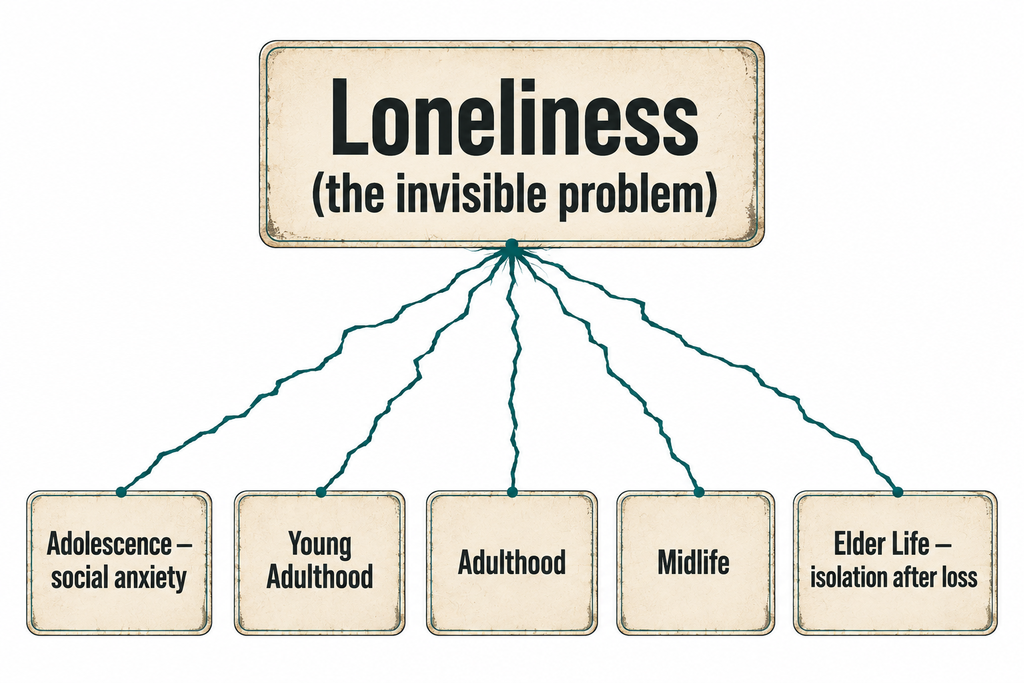
One of the more reliable ways to confirm you’ve found a genuine invisible problem, rather than a symptom, is to check whether the same friction shows up across multiple life phases wearing different clothes.
Loneliness is the clearest illustration of the pattern — not a formally studied taxonomy, but a useful reframe. It shows up in adolescence, young adulthood, adulthood, midlife, and elder life, and each phase produces a completely different visible complaint on the surface. A teenager’s version looks like social anxiety. A retiree’s version looks like isolation after a spouse’s death. On paper these look like unrelated markets. Underneath, they’re the same invisible problem wearing five different disguises.
That distinction changes how you build. Companies that solve loneliness at the level of the invisible problem — the underlying friction, not the age-specific symptom — end up with products that work across several life phases at once. Companies that solve only the teenage version, or only the elder-care version, build something narrower almost by definition. Solve the root and the market expands with you as your users age. Solve the symptom and you’re stuck rebuilding for every new demographic.
Three Invisible Problems Sitting in Plain Sight Right Now
The same reframing exercise works looking forward, not just backward at Blockbuster. Three frictions, below, get talked about constantly in symptom-language and rarely in root-cause language — each one a conceptual illustration of the framework at work, not a market claim backed by a specific study. The value is in the reframe itself, not a number attached to it.
Digital-native identity fragmentation. Parents measure “too much time on the phone.” The friction underneath is starker: an entire generation trying to build a coherent identity inside a social environment algorithmically optimized to fragment and destabilize it for engagement. Screen time is what shows up on a report. Identity instability is what nobody’s built a real answer for. This is the same territory covered in Digital Native, Longevity, Climate Anxiety: The Three Life Phases Nobody’s Built For.
The unclaimed longevity phase. “Old people have health problems” is the version everyone repeats. What it skips: people now living two or three decades beyond traditional retirement age have no social, financial, or psychological framework for what that stretch of life is actually for. Healthcare products handle the body. Almost nothing handles the identity question underneath it.
Undervalued midlife expertise. Call it the gender pay gap and you’ve named the symptom, not the mechanism. Women in their forties and fifties routinely accumulate deep expertise and leadership capacity that organizations fail to recognize, retain, or use — a quiet waste of one of the more potent intellectual resources any company has on hand. The pay-gap number measures the outcome; it doesn’t touch the retention failure driving it.
Notice the pattern across all three: swap the symptom-language everyone already uses for root-friction-language nobody’s bothered to write down. That swap is the transferable skill, and it’s the whole reason the Blockbuster story is worth retelling — the late fee was the symptom, and “customers feel punished by a system built around their forgetting” was the friction underneath it.
Where AI Fits — and Where It Doesn’t
This is where an AI tool built for spotting business problems earns its keep, and also where it hits a hard ceiling.
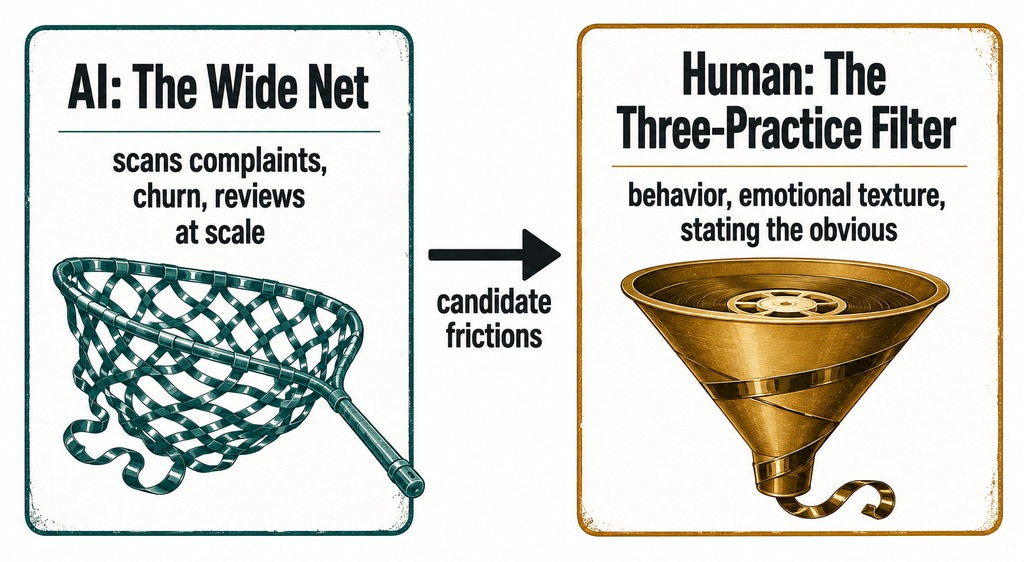
AI is genuinely good at the first practice — watching behavior at scale. It can mine complaint threads, support tickets, churn data, and review text across thousands of customers faster than any team of analysts, flagging clusters of frustration a human would take months to notice manually. That’s a real, useful acceleration of pattern-spotting, and it’s the part of the framework most suited to automation.
It’s much weaker at the second and third practices. Reading for emotional texture — distinguishing “annoyed customer” from “customer who feels quietly punished” — requires a kind of interpretive judgment that pattern-matching on text doesn’t reliably deliver yet. And being willing to state the obvious is, almost by definition, not a task you can outsource to a system trained to reward novelty. AI tends to surface what’s unusual in the data. The invisible problem is usually the thing that’s too ordinary to have been flagged as interesting.
So the honest division of labor looks like this: use AI to scan for candidate frictions at scale, then run every candidate through the three-practice filter by hand before you bet a company, a product line, or a career on one of them. Treat AI as the wide net, not the invisible problem framework itself.
Key Takeaways
- The Netflix origin story is unreliable in its cinematic details, but the underlying late-fee friction was real, well-documented, and litigated — the myth is optional, the problem wasn’t.
- Spot invisible problems by watching behavior over opinions, reading for emotional texture rather than logistics, and being willing to state the obvious even when it feels too simple.
- The same friction often shows up across multiple life phases wearing different disguises (loneliness is the clearest case) — solve it at the root and your product scales across phases, not just one demographic.
- Three live examples worth studying: identity fragmentation among digital natives, the unclaimed longevity phase, and undervalued midlife expertise — each a reframe from symptom-language to root-cause language.
- AI accelerates behavioral-signal scanning at scale but can’t reliably replace human judgment on emotional texture or the courage to name the obvious.
Spotting Invisible Problems Before They Cost You
How is an invisible problem different from a regular pain point?
A pain point is usually the symptom customers already complain about — slow checkout, confusing pricing, a fee they resent. An invisible problem is the deeper friction underneath several related pain points at once. Late fees were the pain point; “customers feel punished by a system built around their forgetting” was the invisible problem.
How do you validate an invisible problem before building something around it?
Check it against real behavior, not stated opinions — lawsuits, churn, workarounds people build for themselves. Then see if the same friction shows up across multiple contexts or life phases in different disguises. If it only shows up once, it might just be a narrow pain point rather than a genuine invisible problem worth building a company around.
Can AI really replace human observation in this invisible problem framework?
Not yet, and probably not soon. AI is well-suited to scanning complaint data and behavioral signals at scale — the first of the three practices. It’s far less reliable at reading emotional texture or at being willing to state something obvious that a model trained to flag novelty tends to overlook. Use it to widen the search, not to make the final call.
Is this framework only useful for startup founders?
No — it applies equally to product teams inside existing companies, investors screening pitches, and analysts evaluating a market before committing resources. Anyone deciding where to spend time or money benefits from separating symptom-language from root-friction-language, which is really what the six-step framework for turning human friction into a business is built to formalize as well.
If you’re evaluating a market right now, don’t start with a survey. Start by watching what people actually do when the friction gets bad enough to sue over, switch over, or quietly walk away over — then ask whether you’re brave enough to just say what everyone already half-knows.
Sources
- The Human Constant — The Problem That Was Always There
- Claim that Reed Hastings has confirmed the $40 Blockbuster late fee actually happened, and that Marc Randolph called the cinematic origin story a “convenient fiction”
- Confirmation that Blockbuster’s late fees totaled approximately $800 million in 2000, roughly 16% of total company revenue
- Confirmation that Blockbuster offered to settle 23 class-action lawsuits over inflated late fees, in a package approaching $450 million
